I remember my first day as president of Tuskegee University in April 2014. The heat in Macon County, Alabama pressed heavy, the buildings bore the weight of deferred maintenance, and the faculty, staff, students, and the Tuskegee community—fiercely loyal but growing weary with multiple presidents since 2010—carried questions in their eyes. The institution would be soon placed accreditation warning, which was noted in a foreboding accreditation letter placed on my desk on the day of my arrival based upon its recently submitted 5-year report. Newspapers wondered whether Tuskegee, once the pride of Black higher education, could endure.
As I stood before the gathered community that day, I felt two shadows at my back. One was Booker T. Washington, who had walked those same grounds a century earlier as its first principal and president—I had been the seventh—proclaiming that faith meant building bricks, raising barns, and cultivating dignity through labor. The other was W.E.B. Du Bois insisting that education must elevate the mind and sharpen intellect through reading, writing and thinking.
Between those two legacies and within my own Christian faith, I had to lead. The great temptation of American memory has been to tell the story of Booker T. Washington and W.E.B. Du Bois as permanent enemies. Washington the Conservative builder, Du Bois the radical agitator. Washington the accommodator, DuBois the prophet. Such binaries are convenient for textbooks and contemporary debate, but they are rarely faithful to the lives of real men who bore the burden of being leaders in the nadir of American race relations.
(Most are not aware that the two consented to book co-authorship containing their individual essays, Du Bois taught one summer at Tuskegee, they both dined together at Washington’s “The Oaks,” and there is a great deal of correspondence between the two in Du Bois’s earlier career before their very public disagreements. Perhaps most of all, most do not know of their profound agreement regarding the need for reform within the African American community just as much as the need for protest on behalf the community-this dual sword was also at the core of Alexander Crummell’s American Negro Academy that Du Bois co-founded.)
Looking back, I see that Washington and Du Bois, so often portrayed as opposites, are better read together. Their synthesisis what I call Christian pragmatism. Washington’s ethic of discipline and labor, paired with Du Bois’s ethic of disciplined thought, shows that Christian leadership begins not with charisma but with character demonstrating itself in words and works. Washington laid bricks and built an institution for his primary vocation, Du Bois wrote scholarly books as well as periodicals for his. Each knew that conviction must become tangible work. In their lives, theology became vocational—even avocational—practice.
Moreover, Washington built schools to strengthen communities; Du Bois developed leaders to confront injustice. Both understood that Christian pragmatism requires not only inward piety but outward service. Washington’s faith was primarily demonstrated through the work of institution building though his oratorical prowess and writings were equally potent. He believed that institutions themselves could be sacraments of faith. His life testified that you could preach as much with a plow as with a pulpit. “Cast down your bucket where you are,” he once told a generation of Black Americans.
It was not resignation but a summons to cultivate dignity, usefulness, and permanence in a hostile land. That conviction steadied me when I faced Tuskegee’s accreditation warning. This was not glamorous work (for as I write elsewhere in a forthcoming work, MONDAY COMETH for all HBCU and small college presidents after the pomp and circumstance of homecoming, social media posts, football games, on campus incidents, alumni and weekend celebrations.)
It meant combing through financial ledgers, aligning governance structures, and insisting on collaboration and accountability at every level. It meant unglamorous meetings with auditors, trustees, consultants, and accrediting agencies. But I knew: if Tuskegee lost its accreditation, generations of Black students would lose opportunity.
In that labor, Washington was with me. To build, even against the odds, was an act of faith. Washington’s Christian faith was less concerned with doctrinal creeds, “exposition, testifying and persuading” (Acts 28:23)—though his Christian faith was well documented—than with the moral formation that comes through work. He believed that labor, performed faithfully and with dignity, could itself be a sermon. The plow, the hammer, and the brick were not merely tools of economic survival but sacraments of public witness.
His message to Black Americans was clear: do not despise the day of small beginnings (Zechariah 4:10). Lay foundations. Till soil. Build schools. Repair what is broken. He urged his people to cultivate faith by cultivating institutions that would outlast a single lifetime.This was the grammar of Washington’s faith, and it steadied me at Tuskegee. To face financial precarity was not glamorous work, but Washington reminded me it was holy work.
It was the work of repair, the planting of seeds, the raising of structures that others would inherit. Washington’s voice reminded me that Christian pramatism in higher education requires not only celebratory vision and self-aggrandizement via social media but the discipline of repairing hurting institutions.
Yet Washington alone could not carry me. Du Bois also walked beside me. His Christian pragmatism was marked not solely by church membership but by intellectual seriousness. Although this engagement was largely through words—his scholarly books and, especially, his periodical writing was the site of most of these commentaries on the black community—in addition to these he was the founder of Crisis Magazine which is still in existence. (Yet, to be clear, he moved very sharply from youthful piety in congregationalist and—even highly Puritanical–Great Barrington, Massachusetts to seasoned agnosticism at the time of his passing in Ghana, Africa.) Du Bois who gave birth to the Harlem Renaissance within the pages of Crisis was roundly criticized by these authors for being too high-handed and moralistic. I and other Du Bois scholars roundly acknowledge this.
All the same, he doubted, he wrestled, and he demanded that any faith worth holding withstand the sharp edge of reason. In my two books on Du Bois, Du Bois on Reform: Periodical-based Leadership for African Americans (2005) and W.E.B. Du Bois: Toward Agnosticism (2008) I came to see his skepticism as a kind of reverence: an unwillingness to trivialize truth. For him, education was sacred because it formed minds capable of wrestling with the highest questions.
When I later became president of Warner Pacific University, a small Christian, minority-serving college in Portland, Oregon, I carried Du Bois with me again.
Warner faced declining enrollment, waning missional alignment and shifting accreditation sanctions owing to the enrollment. Transformation required not just fiscal discipline but also intellectual courage—reimagining how a Christian institution could serve first-generation students, rural white students, and communities of color in a progressive-oriented city such as Portland.
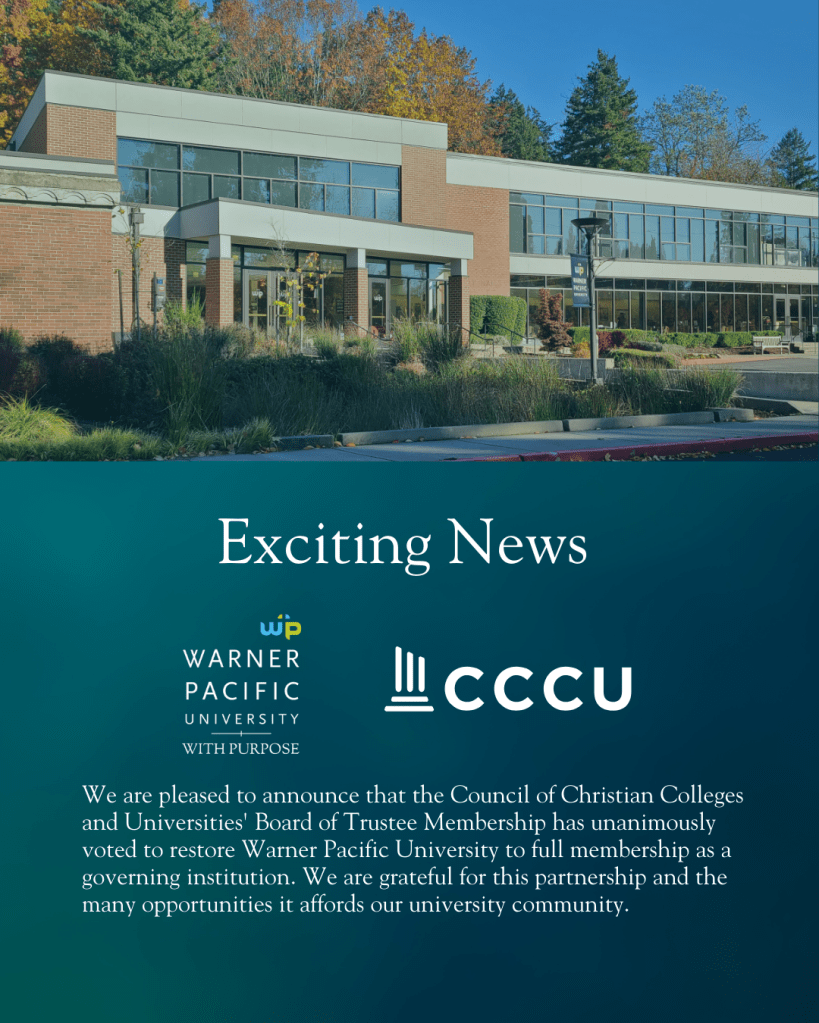
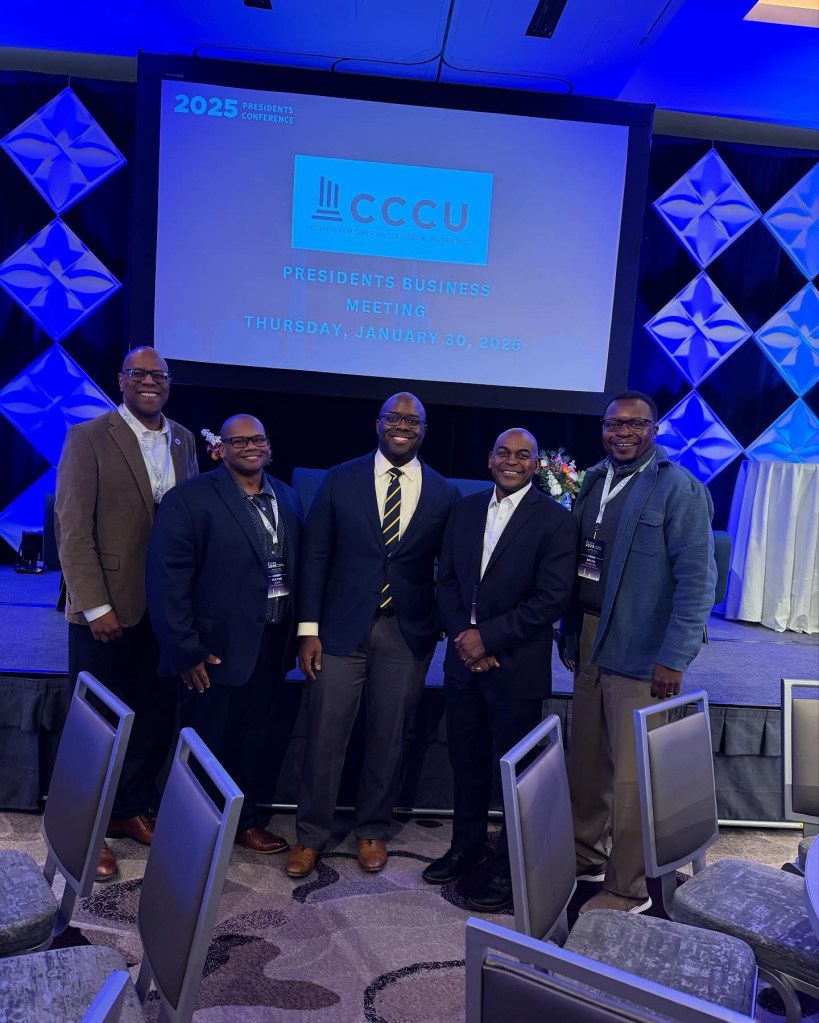
That intellectual labor bore fruit. Warner regained full membership as a Governing Institution in the Council of Christian Colleges and Universities (CCCU), became the first four-year university in Oregon to secure a multimillion-dollar Title V grant, and later received a multimillion-dollar Title II Augustus F. Hawkins grant in consecutive years. Those victories were institutional, yes, but they were also spiritual: they testified that Christian pragmatism is as much about profession as it is about spreadsheets.
Du Bois embodied a different grammar of Christian faith from Washington. His was a restless Christianity—marked by doubt, questioning, and ultimately, by agnosticism. And yet, in that very struggle, he offered a lesson for the Christian: that the life of the mind is not an enemy to faith but a form of reverence in its own right.
Du Bois’s intellectual engagement was uncompromising. He demanded that truth be tested, that claims of faith withstand the scrutiny of reason, that education stretch the human soul toward its highest possibilities. His insistence on intellectual rigor was, at its core, a deeply moral conviction: that Black life in America—as well as the Christian church—was worthy of the most serious thought, reflection and deliberation.
As I look back on Warner Pacific’s ongoing transformation, I see how Du Bois’s intellectual discipline challenged me to imagine more: not only helping preserve the institution which all participated in but rethinking its purpose. In that sense, Du Bois became for me less a skeptic to be resisted than a teacher to be followed insofar as faithfulness to reason is concerned—insisting that thought itself can be an act of faith.
This is what I carried as a president but more importantly as a Christian: the conviction that to lead and live is to integrate faith and reason (faith and learning), heart, hands and head, institution and idea (mission), always with an eye toward the flourishing of others.
When I left Tuskegee in July 2017, its accreditation warning had been lifted. When I left Warner Pacific in August 2025, it was financially stronger, more regionally and nationally recognized, and newly invested in by federal support. These outcomes were not my doing alone—hardly—but the fruit of a tradition I inherited—the tradition of Washington’s labor and Du Bois’s thought, refracted through my own Christian faith and Christian and African Americanintellectual tradition.
Today, when I mentor young leaders, I tell them: Washington and Du Bois are not enemies to be chosen between but teachers to be held together. From Washington we learn that to repair an institution is holy work. From Du Bois we learn that to engage ideas with seriousness is holy work. And from Christ we learn that service—whether with bricks or with books—exists to serve others.
I began my presidency at Tuskegee with two shadows at my back. I carry them still. And in their company, I continue to believe: the work of building, thinking, writing, repairing and leading for the good of others is not only possible—it is a civic and sacred calling.
In my years at Tuskegee and later Warner Pacific University, I came to realize that these legacies cannot be separated.
Washington’s grammar of building taught me that accreditation warnings and financial reforms could themselves be holy work.
Du Bois’s grammar of intellectual engagement taught me that survival was not enough—institutions must also nurture minds capable of deep thought, critical reflection, and moral courage even with the advent of (A.I. Artificial Intelligence).
This synthesis—discipline and dignity, questioning and thought, words and work (integrity)—is what I call Christian pragmatism. It does not pit faith against reason or action against reflection but integrates them in service.
Isaiah’s vision of rebuilding and restoring reminds us that God’s people are called not only to mend walls but also to renew minds. In Washington’s bricks and Du Bois’s questions, I see a Christian pragmatism that calls Christians to both. One repaired the waste places through labor; the other renewed the life of a people through thought. Without respect to one’s vocation, “[Paul] planted, Apollos watered; but God gave the increase. (1 Corinthians 3:6)”
My hope for Christians today (African American and White alike, even hearkening back to the formation of the American Republic and the founding of the Republican-Democratic parties through the divergent and polemic views of Alexander Hamilton and Thomas Jefferson) is that they will embrace this dual inheritance. To labor faithfully like Washington and to think seriously like Du Bois is to embody a Christian pragmatism that strengthens institutions, nurtures communities, and prepares people to flourish.
That, I believe, is the work of Christian Pragmatism (or whatever one chooses to name it for one’s own faith tradition) for all believers and non believers alike demonstrating itself in both words and works in this time.







SPEAKING THE TRUTH IN LOVE
“But speaking the truth in love, may grow up into him in all things, which is the head, even Christ:” Ephesians 4:15
In this particular passage, Paul in his letter to the Ephesians distinguishes the ministry of called and chosen church leaders (apostles, prophets, evangelists, pastors and teachers) from those who would “deceive” others through “cunning,” “craftiness” and “sleight” (Ephesians 4:14). Yet, even in this, the apostle’s distinction –“speaking the truth in love”–has often been distorted. For deception often feigns the attributes of “love” at the expense of communicating “truth”.
Somehow the notion of “speaking the truth in love” has been stripped of “truth” in deference to how “truth” makes the recipient feel or how it is delivered. (Who has ever received correction and did not “smart at the rod”? Or in postmodern terms, who has not felt pain upon being corrected or having the truth spoken to him or her?)
While it is important to communicate with as much gentleness and kindness as one can muster, it is no small wonder to observe “truth” being so stripped of its power and potency in our time owing to postmodern notions of how it makes the recipient feel. (It even gives deceivers greater advantage and greater opportunity, for these have the opportunity to deceive as long as they do not make the hearers feel bad.) All the same, perhaps the most signal way in rightly distinguishing Paul’s ministry from others is simply this: Those who love the most, speak the most truth.
Still further, in his letter to the Hebrews, Paul extends this notion when he speaks more extensively about “fathers” who “correct” and “discipline” sons for their benefit (Hebrews 12: 5-11): “For whom the Lord loveth he chasteneth and scourgeth every son whom he receives” (Hebrews 12:6). And finally we need not look any further than the Lord in his dealings with men who like a parent seeks to raise his children by “speaking the truth in love.” Through John the Revelator, he writes, “As many as I love, I rebuke and chasten…” (Revelation 3:19a).”
Notwithstanding the need to communicate in “love, joy, peace, long suffering, gentleness, goodness, faithfulness, meekness and self-control,” (Galatians 5:22), if the message of “love” is devoid of “truth,” it is wantingly winsome at best–and deceitfully destructive-at worst.
Share this:
Leave a comment
Filed under Uncategorized
Tagged as Biblical Commentary