Category Archives: Uncategorized

Tuskegee University: The Daily Word from Washington with Presidential Commentary

20140922-085247-31967195.jpg

“[To Charles Winter Wood] Fear Booker still unwell. Go Wellesley at once and have full consultation with Mr. Brenner. If you and he think wise and necessary have good physician give Booker thorough examination and do whatever is best for him at any reasonable expense. Have all your dealings with Mr. Benner and do nothing he does not approve. Find out how Booker getting on in every way. Telegraph answer my expense after you have been to Wellesley.”–  “May 21, 1904,” Booker T. Washington

Presidential Commentary by Dr. Brian Johnson  

In still another correspondence demonstrating the paternal regard he had for his son, Booker during his tenure at Wellesley school for the boys, the founding principal and president of Tuskegee (Institute) University once again demonstrates concern for his son yet without undermining the authority of Mr. Brenner, the principal and chief administrator of Wellesley. It is clear that a man of Booker T.Washington’s eminence, renown, position and wealth might have easily sought to “go around” the principal to have his designate attend to his son. However, he did not do so. As a principal and president of an educational institution himself, he fully understood policy, process and protocol. (How could he have otherwise expected others to respect his authority and process as principal of Tuskegee Institute if he did not respect the authority and process of Mr. Benner, principal of Wellesley?) He did not seek advantage upon the grounds of patronage, parentage, position or prominence with respect to young Booker. Instead, he instructed his designate, one Mr. Charles Winter Wood, as follows: “Have all your dealings with Mr. Benner and do nothing he does not approve.”  Here again, “integrity” is the greatest 9-letter word, and one’s words ought to necessarily be synonymous with one’s works. What Mr. Washington expected from others during his tenure at the helm of Tuskegee (Institute) University is in turn what he expected of himself.
Brian L. Johnson, Ph.D.
7th President, Tuskegee University
#TrustTheTuskegeeTrajectory #TrustTheTuskegeeTradition

Leave a comment

Filed under Uncategorized

Tuskegee University: Wes Moore chosen as Tuskegee University Common Reading Experience author

Tuskegee University.

Leave a comment

Filed under Uncategorized

Tuskegee University: The Daily Word from Washington with Presidential Commentary

Daily word_header

“I hope, for instance, that a large proportion of you-in fact all of you-will make it a practice to give something yearly to this institution. If you cannot give but twenty-five cents, fifty cents, or a dollar a year, I hope you will put it down as a thing that you will not forget, to give something to this institution every year. We want to show to our friends who have done so much for us, who have supported this school so generously, how much interest we take in the institution that has given us so nearly all that we possess. I hope that every senior, in particular, will keep this in mind. I am glad to say that we have many graduates who send us such sums, even if small, and one graduate who for the last eight or ten years has sent us ten dollars annually.”-“Sunday Evening Talk,” Booker T. Washington

Presidential Commentary by Dr. Brian Johnson  

When potential donors inquire with an institution concerning its alumni giving participation, the percentage of total alumni giving, not the amount of alumni giving, is the foremost consideration. Even if a single alumnus gives $1M per year, the following questions are immediately begged: What is the giving and interest level of the thousands of remaining alumni that the institution has graduated? Was this a single aberration? Is giving limited to the eminently successful alumni? Or does it extend from small to great-all of whom are recipients of Tuskegee Institute (University) baccalaureate and post-baccalaureate degrees? And interest level goes well beyond public professions of love for one’s alma mater “our nourishing mother,” but the expression of this love in tangible gifts and donations. Mr. Washington, founding principal and president, understood this well when he spoke the following to students who would become future alumni during one of hisSunday evening talks: “We want to show to our friends…how much interest we take in the institution that has given us so nearly all that we possess.” Although the sons and daughters of Booker and Mother Tuskegee are the institution’s most precious value claim to the world-its most precious commodity-the gifts of those interested, including alumni, in the advancement of the institution are what established-and continues to establish-Tuskegee Institute (University’s) reputation as one of the finest campuses and strongest academic destinations in the nation and the world. Friend-raising and fundraising begins at home. And if those who are most intimately familiar with and profess support or love for the institution will not give to it, why would a stranger who is not familiar with and professes no support or love for the institution give to it? Thus consistent giving whether small or great, regularly (monthly or annually), from 100% of graduated students or as Mr. Washington pronounced, “all of you,” is the clearest indicator of alumni strength.

Brian L. Johnson, Ph.D.
7th President, Tuskegee University
#TrustTheTuskegeeTrajectory #TrustTheTuskegeeTradition

Leave a comment

Filed under Uncategorized

Tuskegee University: The Daily Word from Washington with Presidential Commentary

Daily word_header

Personal


“Dear sir: In further answer to your very kind letter of a few days ago making inquiry as to the work of our graduates and ex-students, I would say that one of our officers is employed almost continuously in visiting and inspecting the work being done by the men and women that we turn out, and he makes periodical reports to me of what he finds, and I take the liberty of enclosing to you a copy of the last report which he sent in. An analysis of this report will show that 57 cases are covered. Four are engaged wholly in teaching, 27 work wholly at their trades, 26 teach in connection with working at their trades. Yours truly,”-Booker T. Washington, “July 9, 1903”

Presidential Commentary by Dr. Brian Johnson  

Nothing is more exhilarating-aside from reporting and conveying high rates of alumni giving percentages-for a president of a university to take delight in reporting about his or her alumni than reporting upon their individual successes in their fields of study. Make no mistake, the pride and strength of any institution is its students and its graduates for these individuals represent the core mission and vision-the tradition and trajectory-of any institution of higher learning. Long before the nomenclature of an “outcomes-oriented organization” became commonplace in American higher education, here you find the founding principal and president of Tuskegee (Institute) University providing data-informed responses to inquiries with respect to his graduates. Note, there is not a single day in the life of a university president where he or she is not requested to provide documentable, evidence-based and outcomes-based responses regarding the successes of their institution. Though somewhat rudimentary in 1903, Mr. Washington, all the same, provided “facts” not “floating tales” in the form of a “periodical report” that he is able to readily provide to any would-be supporter or detractor concerning his work at Tuskegee (Institute) University. Here again, it is an extension of Mr. Washington’s often quoted maxim: “Let examples answer.” (It is simply unwise in any endeavor to offer words without accompanying and supporting works.) In this respect, Mr. Washington did not merely suggest that the sons and daughters of Mother Tuskegee were the very best and the brightest, he demonstrated it.

Brian L. Johnson, Ph.D.
7th President, Tuskegee University
#TrustTheTuskegeeTrajectory #TrustTheTuskegeeTradition

Leave a comment

Filed under Uncategorized

Tuskegee University: The Daily Word from Washington with Presidential Commentary

20140922-085247-31967195.jpg

“Dear Sir: Yours of May 2nd has been received and is somewhat of a surprise to me. I would say, however, at the outset that it is against my custom to make reply in regard to tales that are floating about in the air. Any man who is at all before the public will have any number of stories put into his ears, and if he permits himself to be influenced by them I find he will impair his usefulness for work, and it has been my rule to neither deny nor affirm such stories […]” -Booker T. Washington, “May 4, 1892”

Presidential Commentary by Dr. Brian Johnson  

Of all the considerations persons fail to consider when they approach the President of Tuskegee Institute (University)-or any leader of a highly visible organization-is perhaps the most obvious of all: “[…] in regard to tales that are floating about in the air. Any man [or woman] who is at all before the public will have any number of stories put into his ears […]”. And Mr. Washington’s assertion is one that all leaders and talebearers would do well to take heed to. For talebearers, such an omission does not injure the public figure, but injures the bearer of the “tales” designed to “put into his ears.” Unknown to many, the role of President or CEO grants access to a great many details that most persons are not-nor ever will be-privy to.  And those who approach a leader with information that he or she is likely already familiar with will generally find that their information is likely-partial at best or faulty at worst. For if a leader allowed himself or herself to be “influenced” by partial or faulty information, it would “impair his [or her] usefulness for work.” And, in the end, it would be the leader-not the talebearer-who would be standing alone to explain why he or she relied on “floating” tales as opposed to facts.

Brian L. Johnson, Ph.D.

7th President, Tuskegee University
#TrustTheTuskegeeTrajectory #TrustTheTuskegeeTradition

Leave a comment

Filed under Uncategorized

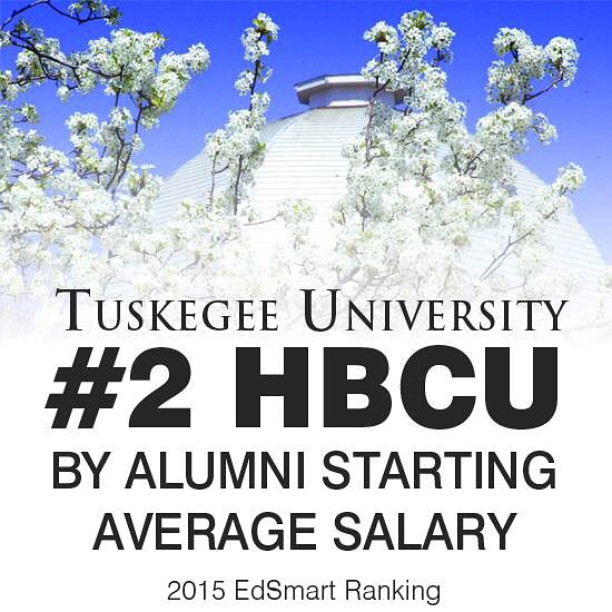
2015 Rankings of Best Historically Black Colleges & Universities | College Choice

2015 Rankings of Best Historically Black Colleges & Universities | College Choice.

Leave a comment

Filed under Uncategorized

TUSKEGEE UNIVERSITY NO. 1 2015 Rankings of Best Historically Black Colleges & Universities | College Choice

2015 Rankings of Best Historically Black Colleges & Universities | College Choice.

Leave a comment

Filed under Uncategorized

Tuskegee University: The Daily Word from Washington with Presidential Commentary

Daily word_header

“Before going to Tuskegee I had expected to find there a building and all the necessary apparatus ready for me to begin teaching. To my disappointment, I found nothing of the kind. I did find, though, that which no costly building and apparatus can supply, -hundreds of hungry, earnest souls who wanted to secure knowledge.” -Booker T. Washington, “Up From Slavery,” (1901)

Presidential Commentary by Dr. Brian Johnson  

To be sure, a surplus of resources-material, monetary, human or property (land)-are necessary for the building of a great institution of higher education. Nevertheless, all of these resources would be wasted if there were not students who are “hungry,” “earnest” and desire “knowledge.” It is roundly true that Mr. Washington’s “Tuskegee Machine” was one of the wealthiest institutions in the nation during the late 19th and early 20th century (and beyond), yet it was equally true that the real strength of the institution was its people-namely the many students and subsequent graduates of Tuskegee (Institute) University who have gone forth as the ‘sons and daughters of Booker and Mother Tuskegee’. For this collective body of students-past, present and future-are the living “building” and “apparatus” of Tuskegee University and the spring from which all of its resources have and must continue to flow. And these students not only represent the strongest indicator of its wealth but these students represent where Tuskegee University’s resources will continue to be invested.

Brian L. Johnson, Ph.D.
7th President, Tuskegee University
#TrustTheTuskegeeTrajectory #TrustTheTuskegeeTradition

Leave a comment

Filed under Uncategorized

Tuskegee University: The Daily Word from Washington with Presidential Commentary

Daily word_header

“I have found that strict business methods go a long way in the securing the interest of rich people. It has been my constant aim at Tuskegee to carry out, in our financial and other operations, such business methods as would be approved of by any New York banking house.” – Booker T. Washington, _Up From Slavery_(1901)

Presidential Commentary by Dr. Brian Johnson  

One of the surest indicators of how an organization might manage another’s resources-fiscal or otherwise-is to consider how this same organization manages its own, and Mr. Washington’s desire to manage Tuskegee Institute in a manner that “would be approved of by any New York banking house” is quite telling. In both its “financial and other operations,” Mr. Washington wanted to ensure that the practices of Tuskegee Institute (University) were such that it would appeal to the persons who could help fiscally advance and develop the University the fastest-“rich people”. While it is true that Mr. Washington received a great many gifts from persons who were not wealthy-make no mistake-many of the most pivotal and significant gifts came from persons with wealth. For the founding Principal and President of Tuskegee Institute (University) well understood that if he was going to attract the “interest” of persons with means then he would have to follow the very practices that were used in managing–and most importantly–achieving such means.

Brian L. Johnson, Ph.D.
7th President, Tuskegee University
#TrustTheTuskegeeTrajectory #TrustTheTuskegeeTradition

Leave a comment

Filed under Uncategorized

Tuskegee University: The Daily Word from Washington with Presidential Commentary

20140922-085247-31967195.jpg

“[I] stuck to my old line of argument, urging the education of the hand, the head and the heart.”  – Booker T. Washington, “My Larger Education,” (1911)

Presidential Commentary by Dr. Brian Johnson  

While there is significant historic disagreement with Mr. Washington’s philosophical orientation toward ‘vocational’ education, what is often omitted in such discussions is his overarching sense of the term “vocation”. The word is derived from its Latin origin, ‘vocare,’ and it means “to call”.  Between the 16th to 19th centuries, ‘vocation’ within a given profession was commonly understood as “calling”. “Vocation” or “Calling” is inclusive of much more than work involving the “the education of the hand,” which undoubtedly was a Washingtonian emphasis in the late 19th and early 20th Century. Notwithstanding, a “heart” enflamed with a personal sense of passion and integrity toward one’s work, a “head” filled with the requisite knowledge for one’s field and, lastly, “hands” that are ready and willing to translate both “heart” and “head” into practical experience within a specified field are the sum whole of Mr. Washington’s notion of “heart,” “head” and “hands”. Thus, Heart (Character) + Head (Competence) + Hands (Capability) = (W)holistic Calling.

Brian L. Johnson, Ph.D.

7th President, Tuskegee University
#TrustTheTuskegeeTrajectory #TrustTheTuskegeeTradition

Leave a comment

Filed under Uncategorized

Tuskegee University: The Daily Word from Washington with Presidential Commentary

20140922-085247-31967195.jpg

“[…] I made up my mind definitely on one or two fundamental points. I determined: First, that I should at all times be perfectly frank and honest in dealing with each of the three classes of people that I have mentioned; Second, that I should not depend upon any “short-cuts” or expedients merely for the sake of gaining temporary popularity or advantage, whether for the time being such action brought me popularity or the reverse. With these two points clear before me as my creed, I began going forward.” -Booker T. Washington, “My Larger Education,” (1911)

Presidential Commentary by Dr. Brian Johnson  
While one may have great difficulty in successfully appealing to multiple constituents and interests, the surest way to fail at doing so is pandering to the opinions of all. And there is no better blueprint for negotiating the pitfalls of paltry politics and partisanship than to follow Booker T. Washington’s two-part course of action throughout his 34-year Presidency (1881-1915): 1. Speak clearly, frankly and honestly at all times. 2. Though laborious-and often painstaking-let your work speak for itself. “Integrity,” the single greatest 9-letter word, speaks to the former. Consistency in communication across constituencies produces confidence. (For conversations spoken in one arena are bound to be communicated to other arenas, and multiple constituencies will quickly discover inconsistencies and inequity when conversations are compared to one another.) “Purpose,” the single greatest 7-letter word, speaks to Washington’s latter formulation. Persons consumed with purpose have little time for pandering and cronyism because they are consumed with performance. (For, in the end, performance and accomplishment-not political expediency-is the primary currency needed in communication across constituent groups.) Mr. Washington’s signal accomplishments-best evidenced in the past, present and future testament of Tuskegee University-provides the clearest telltale signs of his philosophy’s success. And it was no “short cut.”

Brian L. Johnson, Ph.D.

7th President, Tuskegee University
#TrustTheTuskegeeTrajectory #TrustTheTuskegeeTradition

Leave a comment

Filed under Uncategorized

Tuskegee University: The Daily Word from Washington with Presidential Commentary

20140922-085247-31967195.jpg

“We have reached a period when educated Negroes should give more attention to the history of their race; should devote more time to finding out the true history of the race, and in collecting in some museum the relics that mark its progress. It is true of all races of culture and refinement and civilisation that they have gathered in some place the relics which mark the progress of their civilisation, which show how they lived from period to period. We should have so much pride that we would spend more time in looking into the history of the race, more effort and money in perpetuating in some durable form its achievements, so that from year to year, instead of looking back with regret, we can point to our children the rough path through which we grew strong and great.”-Booker T. Washington, (1899)  Future of the American Negro
Presidential Commentary by Dr. Brian Johnson  

John Lukacs suggests the following about the potential of the past coming to bear upon the future: “I saw the future and it was the past.” And Booker T. Washington, founding principal and president of Tuskegee (Institute) University offers a similar advisement in his little-known work, The Future of the American Negro published in 1899. Now, the mere assembling of the “relics” of any people group’s history alone is not a sole predictor of its future. For it greatly depends upon what is being assembled as one paraphrased African proverb offers: “The hunter will always be the hero until the lion has his own historian.” And Mr. Washington recommends the assembling of those “relics [in particular], which mark the progress of their civilization” and “achievements” placed “in some durable form.” (Here again, what one consistently reads, one will consistently become.) If one consistently reads a narrative or documentable history of a people characterized by its clear and documentable successes as opposed to failures documented for varying purposes, such histories will serve to shape not only the psyche of a single people group but also the psyche of all people groups who have a special relationship or closeness to this same group. Such is the history of Tuskegee (Institute) University, where reading the narratives of the men and women (including students, supporters, community members, faculty, staff and administrators) provide a documentable, inspiring and motivating “tradition” (past) that can translate into a documentable, inspiring and motivating “trajectory” (future).

Brian L. Johnson, Ph.D.

7th President, Tuskegee University
#TrustTheTuskegeeTrajectory #TrustTheTuskegeeTradition

Leave a comment

Filed under Uncategorized

Tuskegee University: The Daily Word from Washington with Presidential Commentary

20140922-085247-31967195.jpg

“We frequently hear the word ‘lucky’ used with reference to a man’s life. Two boys start out in the world at the same time, having the same amount of education. When twenty years have passed, we find one of them wealthy and independent; we find him a successful professional man with an assured reputation, or perhaps at the head of a large commercial establishment employing many men, or perhaps a farmer owning and cultivating hundreds of acres of land. We find the second boy, grown now to be a man, working for perhaps a dollar or a dollar and a half a day, and living from hand to mouth in a rented house. When we remember that the boys started out in life equal-handed, we may be tempted to remark that the first boy has been fortunate, that fortune has smiled on him; and that the second has been unfortunate. There is no such nonsense as that. When the first boy saw a thing that he knew he ought to do, he did it; and he kept rising from one position to another until he became independent. The second boy was an eye-servant who was afraid that he would do more than he was paid to do-he was afraid that he would give fifty cents’ worth of labour for twenty-five cents […]The first boy did a dollar’s worth of work for fifty cents. He was always ready to be at the store before time; and then, when the bell rang to stop work, he would go to his employer and ask him if there was not something more that ought to be done that night before he went home. It was this quality in the first boy that made him valuable and caused him to rise. Why should we call him ‘fortunate’ or ‘lucky’? I think it would be much more suitable to say of him: ‘He is responsible.” – “Individual Responsibility: A Sunday Evening Talk,”-Booker T. Washington

Presidential Commentary by Dr. Brian Johnson  

At the onset of receiving an entering incoming freshmen class into a university, one becomes awed and buoyed by the extraordinary sense of possibility that each student has in his or her future. Whether they were a 4.0 student or a 2.8 student in high school, the beginning of freshman year matriculation is a unique opportunity in their lives to start anew and afresh. And Mr. Washington, founding principal and president of Tuskegee Institute (University), provides an example of two young boys who possessed the same opportunities, but had very different outcomes 20 years later. It is all too easy to pass off Mr. Washington’s telling as some moralizing tale designed to motivate his students during one of his Sunday evening talks. Yet, we must be inclined to think that either Mr. Washington himself experienced this so-called tale directly-his autobiographical narrative Up from Slavery (1901) suggests as much-or he observed this in the lives of two of his students in his 34-year long tenure at the helm of Tuskegee University. Washington’s telling of such a tale might also raise the ire and suspicion of those who might argue the following:”It is roundly unfair for Mr. Washington to ascribe lacking personal responsibility to the woes of the second boy’s life because he doesn’t know what happened to him.” Notwithstanding any such dismissals, what Mr. Washington seeks to convey in this talk was the sense of a very real distinction between two young men who approached life matters-whether in the classroom or beyond-quite differently. The first young man was likely accused of being too punctual, too exact or just plain too serious. He often heard the now common proverbial expression: “It doesn’t take all of that.” And in spite of all attempts to justify the many failures of the second boy, all such attempts are undergirded with a profound sense of irony. (The very individuals who defend or make excuse for the second lad will also not hire him nor give him any responsibility regarding that, which is their own.) Wholly consistent with his reputation for being frank, honest and giving ‘straight talk,” Mr. Washington would not allow any such misgivings about his impressions of the success-or relative lack thereof-of the two boys described here. For Mr. Washington believed that “it does take all of that” to reach any desirable outcome, and one will be subject to the envy and criticism of others while doing it. Yet, enduring the sort of suffering experienced by the first boy is far better than experiencing the suffering of the second. We all experience one form of suffering or another, and if one learns how to suffer-to truly know how to suffer well in the thing that is good-one will learn how to succeed.

Brian L. Johnson, Ph.D.
7th President, Tuskegee University
#TrustTheTuskegeeTrajectory #TrustTheTuskegeeTradition

Leave a comment

Filed under Uncategorized

Tuskegee University: The Daily Word from Washington with Presidential Commentary

Daily word_header

“I have been a slave once in my life-a slave in body. But I long since resolved that no inducement and no influence would ever make me a slave in soul, in my love for humanity, and in my search for truth.” -Booker T. Washington, (1907) The Negro in the South

Presidential Commentary by Dr. Brian Johnson  

In a little-known, yet most noteworthy moment in the history of both American and African American literary history, Booker T. Washington jointly published the book, The Negro In the South (1907) containing 2 essays from himself and 2 other essays from none other than W.E.B. Du Bois. (And this was not their first co-publication. This would be the second book containing these two stalwarts in American and African American educational and intellectual history.) All the same, in the first of Mr. Washington’s two essays, he makes the distinction between being a “slave in body” versus being a “slave in soul.” Note the following concerning the remarks of the founding principal and president of Tuskegee (Institute) University: He made a strategic, calculated set of decisions to ensure that his outward circumstance would not determine his future circumstances. (And these decisions revolved around a “love for humanity” and a “search for truth”, which will always place the “lover” and “seeker” of such beyond the pale of those whose pursuits are self-interested and selfish.)  First, a lover of humanity is unafraid to come to learn to love others because he or she has first come to love himself. One can hardly come to learn others if one does not possess a deep love for one’s self, and this includes learning to love both the learned and the ignorant. For a man or woman who ascended to  leadership, as Mr. Washington had done, not only encountered both but had been both during his long ascent Up From Slavery. Second, the seeker of truth seeks after that which is right without regard to where this truth leads. Leo Tolstoy eloquently suggests the following about such a principle: “If you wish to know the truth, first of all free yourself from all considerations of self-interest.” Whether the truth Mr. Washington discovered was for the benefit or detriment to himself or not-“integrity” is the single greatest 9-letter word-this pursuit is without question what leads to 34 years of ongoing, consistent and enduring success for Tuskegee (Institute) University. For unbroken, undivided and unwavering consistency and wholeness is perhaps the closest description of both “truth” and Mr. Washington’s presidency that has served and will continue to serve generations of “humanity.” And this is why we celebrate his accomplishments in this the centennial year of his passing (1915-2015).

Brian L. Johnson, Ph.D.

7th President, Tuskegee University
#TrustTheTuskegeeTrajectory #TrustTheTuskegeeTradition

Leave a comment

Filed under Uncategorized

Tuskegee University: The Daily Word from Washington with Presidential Commentary

20140922-085247-31967195.jpg

“More than that, a school that is content with merely turning out ladies and gentlemen who are not at the same time something else — who are not lawyers, doctors, business men, bankers, carpenters, farmers, teachers, not even housewives, but merely ladies and gentlemen — such a school is bound, in my estimation, to be more or less a failure.”-Booker T. Washington, _My Larger Education_(1901)

Presidential Commentary by Dr. Brian Johnson  

In keeping with his constant emphasis that “style”-however impressive to the eye or palpable to the ear-will never ever be a replacement for “substance,” Booker T. Washington here speaks to the central purpose of a university education. Make no mistake, appropriate dress and eloquent speech is quite essential for the university-trained man or woman. Grades alone without accompanying poise, presence and posture will not assure one’s entrance into career fields where appearance often factors into personal prejudices and/or preferences. All the same, “knowledge,” which is the second greatest 9-letter word after “integrity,” is one of the single most important attributes to be in possession of for the university-trained man or woman for not only the successful entrance into a field of activity but a successful stay. Whether in the 19th Century or the 21st Century, one has to know something. In an increasingly knowledge-based economy and society, “knowledge” is the chief currency and substance in fields of activity where performance enables one to transcend multiple work environments. And the institution that is more concerned with what is upon the backs of her students than what is between the ears of her students, is in the founding principal and president of Tuskegee (Institute) University’s “estimation…more or less a failure.”

Brian L. Johnson, Ph.D.

7th President, Tuskegee University
#TrustTheTuskegeeTrajectory #TrustTheTuskegeeTradition

Leave a comment

Filed under Uncategorized

Tuskegee University: The Daily Word from Washington with Presidential Commentary

20140922-085247-31967195.jpg

“You cannot hope to succeed if you keep bad company. As far as possible try to form the habit of spending your nights at home.“-Booker T. Washington, “A Sunday Evening Talk: On Influencing by Example”

Presidential Commentary by Dr. Brian Johnson  

The adage that one is known by the company he or she keeps is an oft-expressed one, but the founding principal and president of Tuskegee University, Booker T. Washington, extends the adage even further both in the aforementioned passage and in another commonly quoted passage: “Associate yourself with people of good quality. It is better to be alone than in bad company.” Moreover, his additional suggestion to “try to form the habit of spending your nights at home” is a very practical one worth noting. Insofar as it is possible to discern from his autobiography, correspondence, letters, speeches-and more importantly his accomplishments-the man, Booker Washington, apparently did little else but read, write, work and stay at home with his family. And while it is easy to regard Tuskegee (Institute) University’s founding principal with an overwhelming sense of awe, one can begin to appreciate and understand him in view of his own self-discipline and self-sacrifice. (Everyone suffers but few suffer voluntarily. Yet, if one learns how to suffer, one will learn how to succeed.) One need not be reminded that everyone has the same 24 hours in a day, but how one spends those hours is what ultimately distinguishes men and women. (One would simply be amazed at how much more time can be committed to a meaningful mission or a purposeful project if time is not spent in (un)meaningful and (un)purposeful ones that do not result in progress.) Clearly, recreation, fun and leisure have their place but not if these things come at the expense of sustainable success. (Mr. Washington suggests that it is even better when one’s recreation, fun and leisure become part and parcel of one’s work.) For when an individual can transform his or her home into an extension of their workshop, they have the benefit of continuing, doubling and multiplying their labors when others have ceased from theirs.

Brian L. Johnson, Ph.D.

7th President, Tuskegee University
#TrustTheTuskegeeTrajectory #TrustTheTuskegeeTradition

Leave a comment

Filed under Uncategorized

Tuskegee University: The Daily Word from Washington with Presidential Commentary

20140922-085247-31967195.jpg

“Dear Sir: Your kind favor of May 2nd, asking if I could be induced to accept the position of President of Alcorn College is received. I am pleased to know that you should think of me in this connection, and of course feel complimented in the highest degree, but I think it best to say in the beginning that I do not think I could be induced to give up my present position. The salary you name is much larger than I am present receiving but I prefer to remain for the reason that I think for some years to come I can do MORE GOOD here than elsewhere, and for the further reason that there are a number of individuals throughout the North who have given and are giving rather large sums of money to this work, based on their faith in my devotion to this work […]”– “May 9, 1894,” Booker T. Washington

Presidential Commentary by Dr. Brian Johnson  


Highly successful men and women of character, competence and credentials are rarely without suitors for their services. And the founding principal and president of Tuskegee Institute (University) was no exception. Mr. W.B. Murdock of Alcorn College approached Mr. Washington hoping that he “could be induced to accept the position of President of Alcorn College.” And what is most remarkable in Mr. Washington’s reply was not his gracious recognition of the “compliment,” but rather his reasons for not acquiescing to the offer and to remain at Tuskegee Institute (University): “[…] I prefer to remain for the reason that I think for some years to come I can do MORE GOOD here than elsewhere…”. Imagine that. A person electing to remain at an institution on the basis of the GOOD he or she might be able to do as opposed to having a larger salary? Perhaps this is an old-fashioned 19th Century notion or perhaps Mr. Washington and men and women of his ilk-unlike many in the present century-were men and women of purpose. And “purpose” is the single greatest 7-letter word.

Brian L. Johnson, Ph.D.
7th President, Tuskegee University
#TrustTheTuskegeeTrajectory #TrustTheTuskegeeTradition

Leave a comment

Filed under Uncategorized

Mrs. Michelle Obama-First Lady of the United States of America-Tuskegee University Spring 2015 Commencement-May 9, 2015

Leave a comment

Filed under Uncategorized

Tuskegee University: The Daily Word from Washington with Presidential Commentary

20140922-085247-31967195.jpg

“I used to picture the way that I would act under such circumstances; how I would begin at the bottom and keep rising until I reached the highest round of success.”– Booker T. Washington, Up From Slavery (1901)

Presidential Commentary by Dr. Brian Johnson  

Robert Hedrick’s translation of Xenophon’s Cyrus The Great: The Arts of Leadership and War captures a rather profound and startling idea about the power of both the mind and imagination in one’s youth. This is particularly evidenced in Mr. Washington’s autobiographical telling of the time spent in his youth thinking of his future: “I created an empire in my thoughts long before I began to win an empire in reality.” The founding principal and president of Tuskegee (Institute) University, Booker T. Washington, tells of not having many flesh-and-blood examples of “success” due to both his poverty and enslavement. Yet, while his “hands” might have been bound, his “heart” and his “head” were certainly not. Though he might have seen but dimly into what his future held, he “used to picture the way [he] would act under such circumstances.” (Note, one can hardly go where one cannot see one’s self beforehand going. And one can hardly do what one cannot see one’s self beforehand doing.) “Vision” is the greatest 6-letter word, and “leader” is the second greatest 6-letter word in this writer’s opinion. And Mr. Washington possessed “vision” enough for himself-without regard to what others might have seen-to see himself as a “leader,” which he later realized for some 34 years at the helm of Tuskegee (Institute) University.
Brian L. Johnson, Ph.D.
7th President, Tuskegee University
#TrustTheTuskegeeTrajectory #TrustTheTuskegeeTradition

Leave a comment

Filed under Uncategorized

Tuskegee University: The Daily Word from Washington with Presidential Commentary

20140922-085247-31967195.jpg

“We can fill your heads with knowledge, and we can train your hands to work with skill, but unless all this training of head and hand is based upon high, upright character, upon a true heart, it will amount to nothing. You will be no better off than the most ignorant.”-Booker T. Washington, A Sunday Evening Talk

Presidential Commentary by Dr. Brian Johnson  

In this writer’s opinion, “integrity” is the greatest 9-letter word, “knowledge” is the second greatest, and “ignorance” is-by far-the worst and most dangerous. And the founding principal and president of Tuskegee (Institute) University, Booker T. Washington, gives on this Sunday evening talk his oft-repeated conception of “heart-head-hands” to help his students avoid the dread of becoming “no better off than the most ignorant.” One can easily seek the help of professors to develop one’s “head”. (These men and women have as their primary purpose to fill the “heads” of students with “knowledge”.) Likewise, professors are able to help make a student’s “hands”-or their work-“skill”[ful]. (Through repeated instruction and correction a student will either become skillful at their work or they will receive failing grades.) Yet, the matter of the “heart,” Mr. Washington suggests, is one matter where students must begin and complete this work largely alone. (Let no man or woman ever presume to become an expert on the subject of another’s heart.) Of all subject matters, it is the one that is deeply personal and unique to the individual. Whereas both the competencies of the “head” and the credentials of the “hands” lie in full view, the “heart” is always hidden from view. Yet, without it, all else “will amount to nothing.” For Mr. Washington’s complete configuration of Heart-Head-Hands in education is akin to the strength necessary to shoot arrows a great distance even as Tuskegee University has shot forth the sons and daughters of Booker into rewarding and meaningful careers of service for over 133 years. The heart is the unseen and invisible strength that determines how far one can bend the bow to make the arrow go.

Brian L. Johnson, Ph.D.
7th President, Tuskegee University
#TrustTheTuskegeeTrajectory #TrustTheTuskegeeTradition

Leave a comment

Filed under Uncategorized

Tuskegee University: The Daily Word from Washington with Presidential Commentary

Daily word_header

“Some years ago, in an effort to bring our rhetorical and commencement exercises into a little closer touch with real things, we tried the experiment at Tuskegee of having students write papers on some subject of which they had first-hand knowledge. As a matter of fact, I believe that Tuskegee was the first institution that attempted to reform its commencement exercises in this particular direction.” – Booker T. Washington, My Larger Education (1911)
Presidential Commentary by Dr. Brian Johnson 
What might now be considered as painstakingly obvious-the idea that an educated man or woman should be well-versed in having “first-hand knowledge”-Tuskegee University was a visionary institution in the education of her students under the leadership of its founding principal and president, Booker T. Washington. For the characteristic of possessing “first-hand knowledge” is the hallmark of the thoroughly educated man or woman based upon the following reasons: First, these young men and women will be not easily deceived and misled as they enter into their chosen field of study. Having already experienced in some measure-whether in matters great or small-the activities that will be required of them, they are knowledgeable and prepared to not only deal abstractly but practically. Second, they learn to discern second-hand knowledge (or worst hearsay) as men and women of intelligence. (Only the unintelligible rely upon knowledge that they have not vetted “first-hand” or experienced.) The mark of intelligence is but an extension of one’s integrity, the greatest 9-letter word, and if a man or woman would rely upon second-hand and/or piecemeal information in the employment of their duties in their chosen field of endeavor, they put their own work and reputation at risk through no other’s fault but their own. Third and last, “first-hand knowledge” separates one from peers and colleagues who have not undertaken the requisite work and suffering (endurance) necessary for gaining this knowledge. (Hear again, if one learns how to suffer and is willing to suffer well, one will learn how to succeed.) These men and women undertook to do what others were unwilling to do, afraid to do or simply too lethargic to do. The founder’s oft-repeated two most important qualities, “faith” and “hard work”, are both necessary but the latter-the second greatest 4-letter word-is what gives men and women the grand opportunity to separate themselves on the field of “first-hand knowledge.” (These men and women work while others talk.) You will not learn what you will not work to learn, and in this the centennial anniversary of Tuskegee University’s Booker T. Washington’s passing (1915-2015), we celebrate both the legacy and the institution of higher learning he “worked” for 34 years (1881-1915) to establish.

Brian Johnson

7th President Tuskegee University

Leave a comment

Filed under Uncategorized

Tuskegee University: The Daily Word from Washington with Presidential Commentary

Daily word_header\

“After I got so that I could read a little, I used to take a great deal of satisfaction in the lives of men who had risen by their own efforts from poverty to success. It is a great thing for a boy to be able to read books of that kind. It not only inspires him with the desire to do something and make something of his life, but it teaches him that success depends upon his ability to do something useful, to perform some kind of service that the world wants.”-Booker T. Washington, My Larger Education (1901)

Presidential Commentary by Dr. Brian Johnson  
The great scholar, literary critic and ‘Narnia’ chronicler, C. S. Lewis, remarks about the value of books upon a young boy or girl’s imagination: “Since it is so likely that (children) will meet cruel enemies, let them at least have heard of brave knights and heroic courage. Otherwise you are making their destiny not brighter but darker.” Here again, what one consistently reads, one consistently becomes; Just imagine what one might become when one reads about the lives of great men and women from the time of one’s youth even into one’s mature years. This is what the founding principal and president of Tuskegee (Institute) University recommends, and it is a recommendation that we would do well to not only just follow, but continuously follow. First, the world needs verifiable, authentic and organic heroes, not simply scripted and fictional ones. Men and women whose lives are grounded in believable and relatable life experiences that one can readily identify with provides great grounds for hope for those who have similar experiences. Second, one can learn from the mistakes made in the lived lives of others. It is simply not true that one must repeat the mistakes of others. (Instead, you read and learn from them.) The triumphant records of men and women that also record both their foibles and follies are useful for persons of any century to learn, discern and comprehend that what happened before may very well occur again. Third, the lived lives of men and women who are no longer amongst us are permanent, indelible and fixed records that will remain ever unchanged. (One may repeatedly interpret and re-interpret their deeds done but there will be no adding or taking away from them.) And this final thought is one that certainly motivated men and women of the class of Booker T. Washington and should motivate us as well. For Booker T.Washington knew that one has but one life to live, and there would be no do over. When future chroniclers composed the narrative of his life, he wanted to be certain that it contributed to making someone else’s “destiny brighter” not “darker.” The founding principal and president of Tuskegee (Institute) University did not simply write correspondence, books and speeches worth reading; he lived a life worth reading not only in his generation but also in the many future generations to come.
Brian L. Johnson, Ph.D.
7th President, Tuskegee University
#TrustTheTuskegeeTrajectory #TrustTheTuskegeeTradition

Leave a comment

Filed under Uncategorized

Tuskegee University: The Daily Word from Washington with Presidential Commentary

20140922-085247-31967195.jpg

“The education that I received at Hampton out of the text-books was but a small part of what I learned there. One of the things that impressed itself upon me deeply, the second year, was the unselfishness of the teachers. It was hard for me to understand how any individual could bring themselves to the point where they could be so happy in working for others. Before the end of the year, I think I began learning that those who are happiest are those who do the most for others. This lesson I have tried to carry with me ever since.” -Booker T. Washington Up from Slavery (1901)

Presidential Commentary by Dr. Brian Johnson  

One single pound of “passion”-one of the (3) greatest 7-Letter words-is farweightier than the one single pound of pessimism. This is particularly true for professors who desire to impart “knowledge”-the second greatest 9-Letter word-to palpable pupils. And the founding principal and president of Tuskegee (Institute) University makes this point quite powerfully about the professors he encountered at Mother Tuskegee’s sister institution, Hampton University. Mr. Washington’s observation is one whereby all university-trained men and women can attest to. (One might hardly remember a professor’s pedigree, pedantic idiosyncrasies or pedagogy, but you will always remember the professor’s passion.) Passion proceeds from a right sense of a person’s “purpose”-the greatest 7-Letter word-and there is no more passionate person than a professor who has the daily opportunity to impart their hard-won “knowledge”-the second greatest 9-letter word-to students. (Hear again, the complete cycle of education is first learn, apply and demonstrate repeated mastery for one’s self-then and only then-do you teach others.) These people are not only “happy”; they are healthy because they daily receive the reward and return from their students that all persons receive “who do the most for others.” “Unselfishness” lies at the core of this life-long lesson Booker T. Washington, formerly unknown enslaved boy who grew into a well-known globally-renowned leader based on the training he received at the hand of his professors. Though a 19th and early 20th century principal and president of the very highest order, Mr. Washington properly understood a recently recovered 21st century servant-leadership principle pertaining to leadership and power-power primarily should be used for empowering others.
Brian L. Johnson, Ph.D.
7th President, Tuskegee University
#TrustTheTuskegeeTrajectory #TrustTheTuskegeeTradition

Leave a comment

Filed under Uncategorized

Tuskegee University: The Daily Word from Washington with Presidential Commentary

20140922-085247-31967195.jpg

“It seems appropriate during these closing days of the school year to re-emphasize, if possible, that for which the institution stands. We want to have every student get what we have-in our egotism, perhaps-called the “Tuskegee spirit”; that is, to get hold of the spirit of the institution, get hold of that for which it stands; and then spread that spirit just as widely as possible, and plant it just as deeply as it is possible to plant it.” “Last Words: A Sunday Evening Talk,” Booker T. Washington

Presidential Commentary by Dr. Brian Johnson  

Upon the last Sunday evening talk given at the close of the academic year, Booker T. Washington encouraged his hearers to come to learn of, embrace and finally disseminate the “Tuskegee spirit.” (There is something different about Tuskegee University.) It cannot be singularly explained by the eminence of its founding principal and president. It cannot be explained by the eminence of George Washington Carver. It cannot be explained by the aura associated with the “Tuskegee Airmen” whose feats are now known and respected worldwide. One simply cannot come upon the campus of Tuskegee University and not immediately be confronted with an overwhelming sense of the past meeting the present in deeply profound ways. For the “Tuskegee spirit” is what bounds not only its students and alumni but also its faculty, staff, administrators and presidents. It is a living, breathing pride in its beginnings, its present and its future-a future that is interwoven within the lives of every individual that has come upon the grounds of this sacred land. The “Tuskegee spirit” is none other than the spirit of a people-a great people embodying the very best and brightest in any and every tradition the world has ever known.
 Brian L. Johnson, Ph.D.
7th President, Tuskegee University
#TrustTheTuskegeeTrajectory #TrustTheTuskegeeTradition

Leave a comment

Filed under Uncategorized

Tuskegee University: The Daily Word from Washington with Presidential Commentary

20140922-085247-31967195.jpg

“I have often said to you that one of the best things that education can do for an individual is to teach that individual to get hold of what he wants, rather than to teach him how to commit to memory a number of facts in history or a number of names in geography. I wish you to feel that we can give you here orderliness of mind-I mean a trained mind-that will enable you to find dates in history or to put your finger on names in geography when you want them. I wish to give you an education that will enable you to construct rules in grammar and arithmetic for your-selves. That is the highest kind of training. But, after all, this kind of thing is not the end of education. What, then, do we mean by education? I would say that education is meant to give us an idea of truth. Whatever we get out of text books, whatever we get out of industry, whatever we get here and there from any sources, if we do not get the idea of truth at the end, we do not get education. I do not care how much you get out of history, or geography, or algebra, or literature, I do not care how much you have got out of all your text books:-unless you have got truth, you have failed in your purpose to be educated. Unless you get the idea of truth so pure that you cannot be false in anything, your education is a failure.”– Booker T. Washington, “A Sunday Evening Talk”

Presidential Commentary by Dr. Brian Johnson  

Of the many truths the founding principal and president of Tuskegee (Institute) University proffered in his many speeches, writings and correspondence, the following is perhaps the single most profound and difficult one to grasp: “Unless you get the idea of truth so pure that you cannot be false in anything, your education is a failure.” Now it may appear to the naysayer that Mr. Washington makes a rather prideful or arrogant assertion but C.S. Lewis’s idea that “perfect humility dispenses with modesty” rejects such an accusation.  (“Humility” is the greatest 8-letter word and “Fearless” is the second greatest 8-letter word in succession with good reason.) To be clear, there is no man or woman who will have not had error or failure at some point in their vocational path or journey. Yet, Mr. Washington’s conception of “education” encompasses those who have erred and failed because a “truth so pure that you cannot be false in anything” permits a single man or woman to ascertain valuable and truthful lessons whether through triumph or tragedy. For this man or woman-the truly educated man or woman-never experiences “falsity [or failure] in anything” because he or she lives, learns and then leads others to wrest the valuable water of “knowledge”-the second greatest 9-letter word-from any dampening circumstance. Moreover, these men and women proceed undauntedly, unflinchingly and unwaveringly day-to-day, month-to-month and year-to-year to continuous and ongoing “success”-one of the greatest 7-letter words-without ever experiencing real “falsity” or “failure” in the truest sense of the words.  For never can a man or woman who possesses and applies the sort of education Mr. Washington established at Tuskegee University can ever rightly be called “false” or a “failure” because a truly educated man or woman ultimately views success and failure rightly according to the greatest 8-letter words: “Humility” and “Fearless,” which again are the greatest 8-letter words in succession.

Brian L. Johnson, Ph.D.
7th President, Tuskegee University
#TrustTheTuskegeeTrajectory #TrustTheTuskegeeTradition

Leave a comment

Filed under Uncategorized

Tuskegee University: The Daily Word from Washington with Presidential Commentary

20140922-085247-31967195.jpg

“My dear Mr. President [Theodore Roosevelt]: If you have in mind the sending in of a special message bearing upon the lynching of Italians in Mississippi, I am wondering if you could not think it proper to enlarge a little on the general subject of lynching; I think it would do good. I think you could with perfect safety, give the Southern States praise, especially the Governors and the daily press, for assisting in reducing the number of lynchings. The subject is a very important and far reaching one and keeps many of our people constantly stirred up […].”

-Booker T. Washington, “January 5, 1902”

Presidential Commentary by Dr. Brian Johnson  

Leo Tolstoy offers the following expression concerning men and women who live according to their conscience, as opposed to the dictates of popular sentiment: “He who lives not for the sake of his conscience, but for the sake of others’ praise, lives badly.” Although Booker T. Washington, founding principal and president of Tuskegee (Institute) University, might have expressed his views more diplomatically than most men and women of his era who were not situated at the helm of a major institution, he possessed his own methods to express his views nevertheless.  And the communication to U.S. President Theodore Roosevelt suggests a great deal about how this institutional president operated in matters of national importance. First, he need not make a public announcement of his views. Booker T. Washington had direct access to the President of the United States. An advisor to President Roosevelt on a number of political matters, his letters reveal an ongoing stream of communication that suggests that his advice and opinion mattered to the President and would be weighed carefully. Second, he used the opportunity of President Roosevelt’s apparent willingness to discuss “the lynchings of Italians in Mississippi” to suggest that he broaden his discussion to encompass to one of his primary constituencies and concerns during the period-the lynching of African Americans. Finally, he alluded to the importance of the President addressing the subject: It was for the benefit of all Americans. He fittingly ascribed his concern to the well being of the country similar to Lyman Beecher Stowe’s sentiment when he penned the following: “Here in America, we are all, in the end, going up or down together.” Here again, the man Booker T. Washington might not have done what many desired him to do and in the precise manner they would have liked for him to do but he did do what he thought was right to do.

Brian L. Johnson, Ph.D.
7th President, Tuskegee University
#TrustTheTuskegeeTrajectory #TrustTheTuskegeeTradition

Leave a comment

Filed under Uncategorized

Tuskegee University: The Daily Word from Washington with Presidential Commentary

Daily word_header

“In order to be successful in any kind of undertaking, I think the main thing is for one to grow to the point where he completely forgets himself; that is, to lose himself in a great cause. In proportion as one loses himself in the way, in the same degree does he get the highest happiness out of his work.” -Booker T. Washington, “Up From Slavery,” 1901

Presidential Commentary by Dr. Brian Johnson  
One can find no greater joy than to serve a cause higher than one’s self-particularly when the cause is associated with one’s work. And it would be very difficult to find a historic figure whose life and work better embodies this notion than Booker T. Washington and the work of building Tuskegee Institute (University). Consider the circumstances of his arrival in Tuskegee from Hampton Institute. An abandoned hen house served as his first classroom; His students possessed varying levels of literacy, and above all, he had few resources to purchase additional property for the institute’s growth-pawning his own watch in repayment of an early loan. And while he might have easily thought of himself and abandoned the entire enterprise, he did precisely the opposite. Mr. Washington “completely [forgot] himself” to serve a “great cause.” Serving a cause greater than personal preference often leads to the kind of success that benefits not only a singular person but both people and purposes. For careers fill pockets; Careers linked to callings fulfill people; and fulfilled people achieve great purposes.
Brian L. Johnson, Ph.D.
7th President, Tuskegee University
#TrustTheTuskegeeTrajectory #TrustTheTuskegeeTradition

Leave a comment

Filed under Uncategorized

Tuskegee University: The Daily Word from Washington with Presidential Commentary

20140922-085247-31967195.jpg

 “Among the most trying class of people with whom I come in contact are the persons who have been educated in books to the extent that they are able, upon every occasion, to quote a phrase or a sentiment from Shakespeare, Milton, Cicero, or some other great writer. Every time any problem arises they are on the spot with a phrase or a quotation. No problem is so difficult that they are not able, with a definition or abstraction of some kind, to solve it. I like phrases, and I frequently find them useful and convenient in conversation, but I have not found in them a solution for many of the actual problems of life.”– Booker T. Washington, My Larger Education (1911)

Presidential Commentary by Dr. Brian Johnson  

We often deceive ourselves by assuming that a word fitly spoken, an opinion boldly proffered, an argument well-written or a critique loosely given is tantamount to leadership–particularly with respect to solving “the actual problems of life.” And this is the idea that Booker T. Washington explained in his observations of men and women who offer words without any accompanying works. Thomas Edison suggested that “A vision without execution is a hallucination.” To be clear, “vision”-the single greatest 6-letter word- requires words for articulating, reasoning, inspiring and motivating. Yet, this is only one half of the deal in leadership. The other half is transforming those words into works. Such works, unlike words, are never philosophical or theoretical “abstraction[s]”. These works are “solution[s] for many of the actual problems” that visionary words propose to solve. Works are the evidentiary and documentable deeds done that substantiate the words of visionary leadership. Works are what can be touched, pointed to and-most importantly-verified, substantiated and authenticated precisely like the presence of Tuskegee (Institute) University that still stands a full century since Mr. Washington’s death (1915-2015). Mr. Washington’s late 19th and early 20th century demonstration of visionary leadership is the complete expression of a leader’s love for “words” that he found “useful and convenient in conversation,” as well as his “work” achieved and completed at Tuskegee. And witnessing such visionary leadership is akin to persons upon a ship viewing an iceberg in the middle of a frigid ocean. The “words” are what sit atop the iceberg’s tip until the “works” of the impressive mass that lies beneath comes slowly into view.

Brian L. Johnson, Ph.D.
7th President, Tuskegee University
#TrustTheTuskegeeTrajectory #TrustTheTuskegeeTradition

Leave a comment

Filed under Uncategorized

Tuskegee University: The Daily Word from Washington with Presidential Commentary

20140922-085247-31967195.jpg

“Some people may say that it was Tuskegee’s good luck that brought to us this gift of fifty thousand dollars. No, it was not luck. It was hard work. Nothing ever comes to me, that is worth having, except as a result of hard work. When Mr. Huntington gave me the first two dollars, I did not blame him for not giving me more, but made up my mind that I was going to convince him by tangible results that we were worthy of large gifts. For a dozen years I made a strong effort to convince Mr. Huntington of the value of our work. I noted that just in proportion as the usefulness of the school grew, his donations increased.” -Booker T. Washington, _My Larger Education_ (1911)

Presidential Commentary by Dr. Brian Johnson  

Nothing is more disturbing to hear about individual or organizational success-especially if you have contributed to such success-than that such success should be attributed to “luck” and not “hard work”. Hard work involves deliberate and persistent effort directed towards a designated end that is often easy to gloss over when witnessing the outcome and not the work preceding it. And such was Mr.Washington’s work in the advancement and development efforts of Tuskegee Institute (University). Here was a man who did not scoff at any amount received into the coffers of Tuskegee whether great or small. Without regard to the amount, he “made up [his] mind” to be resolute about his pursuit for even larger ones with his chief aid being “tangible results.” Or, as he wrote elsewhere, “Let[ting] Examples Answer.” For when an organization’s “examples answer,” it becomes easier to proceed from strength to strength because past successes are often the surest indicators of future successes.
Brian L. Johnson, Ph.D.
7th President, Tuskegee University
#TrustTheTuskegeeTrajectory #TrustTheTuskegeeTradition

Leave a comment

Filed under Uncategorized

Tuskegee University WELCOMES FIRST LADY OF THE UNITED STATES OF AMERICA AS ITS 2015 COMMENCEMENT SPEAKER

Tuskegee University.

Leave a comment

Filed under Uncategorized

Tuskegee University: The Daily Word from Washington with Presidential Commentary

20140922-085247-31967195.jpg

Personal and Confidential

[To William Howard Taft]

My dear Mr. President: In considering the matter of the new judge for the Northern District of Alabama, I hope you will bear in mind the interests of the Negro. The United States Courts have been, as it were, kind of “cities of refuge” for the colored people. I mean that in these courts they have been always sure of securing justice in cases that properly come under the jurisdiction of such courts by reason of the fact that the judges have been such broad and liberal men that the juries have represented a class of people who would see that a fair verdict was rendered.

Not only this, but in the United States Courts in the South Negroes have heretofore been place on the grand jury and petit jury and in this way they gotten recognition that they have not gotten in any other case. This matter, as small as it is, has gone to make them feel that they were citizens and has encouraged them not a little. With few exceptions, where narrow minded men have been made judges they have gradually used their influence in some way to keep Negroes off the juries and have made them feel that they had few rights in these courts.

Please do not take the time to answer this letter. Yours very truly, Booker T. Washington, “May 6, 1909”

Presidential Commentary by Dr. Brian Johnson  

After “integrity,” and “knowledge,” “influence” is the third greatest 9-letter word. And in this letter to the 27th President of the United States of America, William Howard Taft, Booker T. Washington once again demonstrates that the range of his “influence” extended to the very highest levels of American government. In earlier correspondence, President Taft, who succeeded President Theodore Roosevelt in 1909, made it crystal clear that the founding principal and president of Tuskegee (Institute) University would still be expected to play a similar major role in advising the President of the United States as he had done with President Roosevelt. (The correspondence reveals that Roosevelt not only recommended Washington’s pivotal role in consulting on major affairs but also Taft readily assented.) All the same, we learn in the letter to President Taft three very important considerations about the founding principal and president of Tuskegee University and his “influence.” First, we learn, contrary to popular opinion, he used his “influence” to address issues that concerned one of his most important constituents: African Americans. Here again, one would be remiss to think that Mr. Washington did not advocate on issues of importance. Rather, he moved “in a rather quiet way” as he indicated in a previous communiqué.  (The loudest communication is not necessarily the most effective communication, and Mr. Washington’s direct correspondence with the President of the United States is effective communication.) Second, the “influence” of Mr. Washington’s correspondence was certain in that it was marked “personal and confidential.” This was not one of many letters that the President of the United State or any man or woman situated at the helm of a large organization receives that may or may not come to his attention or was handled through an intermediary. It is clear that Mr. Washington’s letters would be read by the President himself. So much so that Mr. Washington did not even need a reply: “Please do not take the time to answer this letter.” Third and last, Mr. Washington’s “influential” advocacy was owing to sound, sober and logical reasoning. His letter thoughtfully and dispassionately articulates the potential success for President Taft in following his suggestion based upon both past and present successes in similar matters. (No doubt Mr. Washington was likely part of such decisions during the Roosevelt Administration.) All three of these reasons-along with many, many more-are why Tuskegee University celebrates the “influence” of Booker T. Washington in this the centennial year (1915-2015) since his passing.

Brian L. Johnson, Ph.D.

7th President, Tuskegee University
#TrustTheTuskegeeTrajectory #TrustTheTuskegeeTradition

Leave a comment

Filed under Uncategorized

Tuskegee University: The Daily Word from Washington with Presidential Commentary

Daily word_header

“I do not say you should not use them, should not posses them, should not crave them, but do not make the mistake of feeling that titles are going to help you, unless you have got strength aside from the title. No amount of titles will put brains into a person’s head if the brains are not there before.”-Booker T. Washington, “A Sunday Evening Talk,” January 10, 1909

Presidential Commentary by Dr. Brian Johnson  

Hear this again and again: Positional and titular authority is the lowest form of authority. If a man or woman cannot nor does not command the respect of his supervisors, peers, colleagues and subordinates independent of a position or title, this man or woman is no greater than the man or woman who has no such position and title. Positions change, and the only permanence one can possess is that found in one’s own person in back of the position. This is why the founding principal and president of Tuskegee University constantly impressed upon his students the need to constantly improve their own persons. Note the following: It is but half the task to secure the title or position. The most significant half is what one does with the title or position. (One must not only plan how to get the position or title, but what to do with the position and title when one gets it.) And the attention paid to one’s own person helps towards this end. Aside from acquiring credentials and competence, the comprehensive development of one’s person is a third facet that can never be taken from the person in back of a position. More importantly, these facets are easily transferable from position to position, unit to unit or organization-to-organization, which is why the singular, solitary focus upon a position and title (as opposed to the development of one’s own person) is unwise. For the man or woman who has “strength aside from the title” and who has “brains” in their “heads” will always possess these attributes without regards to a position or a title. (And they will always be desired and in demand.) And the founding principal and president of Tuskegee University who we celebrate in the centennial year since his passing (1915-2015) was not only such a man, but he also offered these wise “words” and set forth the accompanying “works” in his 34-year long presidency at the helm of Tuskegee (Institute) University (1881-1915).

Brian L. Johnson, Ph.D.

7th President, Tuskegee University
#TrustTheTuskegeeTrajectory #TrustTheTuskegeeTradition

Leave a comment

Filed under Uncategorized

Tuskegee University: The Daily Word from Washington with Presidential Commentary

Daily word_header

“ONE of the first questions that I had to answer for myself after beginning my work at Tuskegee was how I was to deal with public opinion on the race question.It may seem strange that a man who had started out with the humble purpose of establishing a little Negro industrial school in a small Southern country town should find himself, to any great extent, either helped or hindered in his work by what the general public was thinking and saying about any of the large social or educational problems of the day. But such was the case at that time in Alabama; and so it was that I had not gone very far in my work before I found myself trying to formulate clear and definite answers to some very fundamental questions.”-Booker T. Washington, My Larger Education(1911)

Presidential Commentary by Dr. Brian Johnson  

As a prelude to the second chapter, “Building A School Around A Problem,” contained within his book, My Larger Education (1911), the founding principal and president of Tuskegee (Institute) University discussed his need to not only build a school but to do so “around a problem.” And like similar undertakings when starting something anew, it was never a question of Booker T. Washington’s professional preparation, training or skill set; nor was it ever a question of his personal “integrity” and “knowledge”. Rather, Mr. Washington found himself consumed with the “problems” of race that persons were more concerned with than the work of “building a school” designed to partly address these matters. And Mr.Washington makes it crystal clear how he would proceed to begin grappling with matters beyond the strict performance of his duties associated with being principal and president of Tuskegee: “ONE of the first questions that I had to answer for myself…” Note, no one was qualified nor experienced enough to assist the 25-year-old Booker newly arrived in Tuskegee, Alabama (Macon, County) in 1881, where the idea of starting an institution would be entirely foreign to a group of newly emancipated slaves who possessed no literacy nor life experiences beyond the rural locale. (He would also have to learn to communicate with former slave owners who had never encountered a gifted, visionary educational leader who could read, write and think beyond what they had probably expected.)  To be sure, advisers similar to General Samuel Armstrong, founding principal and president of Hampton Institute (University) could certainly provide guidance on the actual work he was doing and on these matters in general; but on the day-to-day matters of living, learning and leading in Tuskegee, Alabama, this young founder had to find out “for myself.” And what is crystal clear is that he not only did so but he did so in exceedingly, demonstrative and effective ways for everyone to see in both Tuskegee and throughout the world for over 34 years at the helm of Tuskegee. Here again, this is why we celebrate his “vision”, his abilities as a “leader” and his extraordinary-not ordinary-“genius” in this the centennial year (1915-2015) since his passing. And in this writer’s opinion, “vision,” “leader” and “genius” are the greatest 6-letter wordsin succession.

Leave a comment

Filed under Uncategorized

Tuskegee University: The Daily Word from Washington with Presidential Commentary

Daily word_header

“I have been a slave once in my life-a slave in body. But I long since resolved that no inducement and no influence would ever make me a slave in soul, in my love for humanity, and in my search for truth.” -Booker T. Washington, (1907) The Negro in the South

Presidential Commentary by Dr. Brian Johnson  

In a little-known, yet most noteworthy moment in the history of both American and African American literary history, Booker T. Washington jointly published the book, The Negro In the South (1907) containing 2 essays from himself and 2 other essays from none other than W.E.B. Du Bois. (And this was not their first co-publication. This would be the second book containing these two stalwarts in American and African American educational and intellectual history.) All the same, in the first of Mr. Washington’s two essays, he makes the distinction between being a “slave in body” versus being a “slave in soul.” Note the following concerning the remarks of the founding principal and president of Tuskegee (Institute) University: He made a strategic, calculated set of decisions to ensure that his outward circumstance would not determine his future circumstances. (And these decisions revolved around a “love for humanity” and a “search for truth”, which will always place the “lover” and “seeker” of such beyond the pale of those whose pursuits are self-interested and selfish.)  First, a lover of humanity is unafraid to come to learn to love others because he or she has first come to love himself. One can hardly come to learn others if one does not possess a deep love for one’s self, and this includes learning to love both the learned and the ignorant. For a man or woman who ascended to  leadership, as Mr. Washington had done, not only encountered both but had been both during his long ascent Up From Slavery. Second, the seeker of truth seeks after that which is right without regard to where this truth leads. Leo Tolstoy eloquently suggests the following about such a principle: “If you wish to know the truth, first of all free yourself from all considerations of self-interest.” Whether the truth Mr. Washington discovered was for the benefit or detriment to himself or not-“integrity” is the single greatest 9-letter word-this pursuit is without question what leads to 34 years of ongoing, consistent and enduring success for Tuskegee (Institute) University. For unbroken, undivided and unwavering consistency and wholeness is perhaps the closest description of both “truth” and Mr. Washington’s presidency that has served and will continue to serve generations of “humanity.” And this is why we celebrate his accomplishments in this the centennial year of his passing (1915-2015).

Brian L. Johnson, Ph.D.

7th President, Tuskegee University
#TrustTheTuskegeeTrajectory #TrustTheTuskegeeTradition

Leave a comment

Filed under Uncategorized

TUSKEGEE UNIVERSITY TRANSCRIPTS NOW AVAILABLE ONLINE.

Tuskegee University.

Leave a comment

Filed under Uncategorized

Tuskegee University: The Daily Word from Washington with Presidential Commentary

Daily word_header

“My dear friend Mr. Briggs: I will open school the 1st Monday in July. Judging from present prospects I shall have about thirty students the first day and a steady increase…”-Booker T. Washington, June 28, 1881

Presidential Commentary by Dr. Brian Johnson  

On  June 28, 1881, a 25-year old Booker T. Washington had enrolled 30 students before Tuskegee Institute (University) was officially founded on July 4, 1881. While this was clearly a noteworthy moment at the onset of his presidency, this is not what is most startling about the first of many achievements that this young president would accomplish during his subsequent 34-years at the helm of Tuskegee (Institute) University. This young man’s single most signal historic achievement-in this writer’s opinion-occurred on June 24,1881, which is the date that this student and teacher who had been trained by General Samuel Armstrong, arrived in Tuskegee, Alabama. (We know this because on June 25, 1881 Mr. Washington wrote to James Fowled Baldwin Marshall the following: “Dear friend: Arrived here yesterday.”) And it was on that day that a “Copernican Revolution” in the landscape of higher education occurred, not only in Tuskegee but in the history of the world. For this young man’s arrival (to start an institution of higher learning for newly freed African Americans) reverberated and transcended not simply the city of Tuskegee and the county of Macon, but the entire world. These 30 men and women who were likely still using skill sets acquired during enslavement would now be afforded the opportunity to use these skills to gain their own economic and intellectual independence. They need not work for their former masters with little distinction in pay from the time of physical bondage. After the training of their hearts, heads and hands within this new institution of higher learning called Tuskegee Normal School (Institute) University, they could now use their own skill sets to start their own businesses and offer their services in a much more economically viable exchange between formerly enslaved men and women and their former masters. And this perhaps ranks atop of the many other significant reasons why we celebrate Booker T. Washington in this the centennial year (1915-2015) since his passing.
Brian L. Johnson, Ph.D.

7th President, Tuskegee University
#TrustTheTuskegeeTrajectory #TrustTheTuskegeeTradition

Leave a comment

Filed under Uncategorized

Tuskegee University: The Daily Word from Washington with Presidential Commentary

Daily word_header

“My dear Mr. Schmidlapp: I thank you very much for your letter of January 3rd, also, for yours of December 7th, which I did not have the privilege of answering in person. We thank you for your subscription of One Hundred Dollars toward the Repair Fund. This will help us much.” -Booker T. Washington, January 12, 1910.”

Presidential Commentary by Dr. Brian Johnson  

There is no greater expense for many universities that were founded in the mid to late 1800s than the following: Deferred Maintenance Costs for both living and learning facilities. And the founding principal and president of Tuskegee (Institute) University was at the forefront of understanding how to create a diverse portfolio of fundraising that included, among other things, restricted gifts for the express purpose of going to the “Repair Fund.” Note, the modern-day equivalent of the “Repair Fund” is akin to seeking both small and major “restricted” gifts for the renovation, restoration and repair of “bricks and mortar”. (These are living facilities where students reside and learning facilities where professors teach and research. Many institutions have now combined such functions where students and professors can simultaneously “live and learn.”) “Restricted” gifts designated for the renovation, restoration or repair of living and learning facilities are often used to serve “unrestricted” purposes. For when an institution can secure such gifts then monies contained within its own annual deferred maintenance budget can be used to renovate, restore and repair additional living and learning facilities. More importantly, when an institution possesses a deferred maintenance plan or schedule that designates monies for renovation, restoration and repair projects over a certain period, a single major “restricted” gift might allow the institution to improve a residential facility or classroom facility years before what the deferred maintenance schedule and plan originally projected. While this is generally understood in a knowledge-based, data-informed and outcomes-oriented 21st century higher education enterprise, here we find that Booker T. Washington was doing this not only in 1910, but as early as 1881 when he arrived in Tuskegee, Alabama only to discover that he would be spending his earliest years teaching in a hen house. (34 years later, he took this hen house and-with the help of employees like Robert R. Taylor and Emmett J. Scott and faculty members like George Washington Carver-transformed it into the single most immaculate campus in all of higher education both nationally and globally.) And this is why we celebrate Booker T. Washington in this the centennial year (1915-2015) since his passing. For this was a man of substance whose writings, correspondence and (most importantly) deeds have demonstrated that he worked with “integrity” and “knowledge,” which are the two single greatest 9-letter words, which is also probably why one of Mr. Washington’s favorite sayings was as follows: “Let Examples Answer.”
Brian L. Johnson, Ph.D.
7th President, Tuskegee University
#TrustTheTuskegeeTrajectory #TrustTheTuskegeeTradition

Leave a comment

Filed under Uncategorized

Tuskegee University: The Daily Word from Washington with Presidential Commentary

Daily word_header

“Confidential to Booker T. Washington:

My dear Dr. Washington; At a meeting of the Investment Committee held on Tuesday, the 21st, I took the liberty of suggesting that I thought you ought to take a good vacation, if possible, during the summer. Such speaking campaigns as you have conducted last year and this, through different sections of the South, seem to me as important work as you have ever done, not only for your own race but for the country as a whole. I know very well, however, that that sort of thing is very exhausting; and I want you, if you can, to arrange your plans so that you may get some of the rest and refreshment of mind and body which will enable you to keep up that sort of service for more years. I am happy to report that the Committee was unanimously in sympathy with this suggestion, and I am writing to you now to say that I have at command the sum of One thousand dollars made up by a number of your friends for the purpose of enabling you to go to Europe next summer, or to any other place where you think you can get real rest. We do not want to send you away in order that you may do work elsewhere. Our purpose is to secure for one who has legitimately earned it, the sort of let-up which is so necessary now and then to keep one’s power at their best. I am writing to you at this early day, so that you may have plenty of time to plan for your absence, if you think you can go. Please write to me frankly just how you feel and what you would like to do.   Yours sincerely, Seth Low, “December 23, 1909”

Presidential Commentary by Dr. Brian Johnson  

Without question, Booker T. Washington’s 34-plus years of correspondence, speeches, writings, fundraising activities, institution building and a wide array of other activities demonstrate nothing other than this single, solitary fact: The founding principal and president of Tuskegee (Institute) University worked, and he worked a lot.  And the above passage is taken from one Mr. Seth Low who wanted to arrange for Mr. Washington to take some rest. While it is unclear whether Mr. Washington followed this recommendation-there is correspondence also from Mr. Emmett J. Scott that indicated that Mr. Washington routinely did not wish to rest-Mr. Low and his colleagues were also clear on another single, solitary fact: “Our purpose is to secure for one who has legitimately earned it, the sort of let-up which is so necessary now and then to keep one’s power at their best.” Note the following: Booker T. Washington, at the time of this letter, had been serving 29 years in this capacity as founding principal and president. While he was certain to have vacationed before, Mr. Low and his colleagues took great pains to make some attempt to preserve Mr. Washington’s health. (Unbeknownst to all, the esteemed founding principal and president would pass away only 5 years later in 1934.) Notwithstanding, what was painstakingly clear then and remains painstakingly clear now, the man Booker T. Washington worked tirelessly on behalf of Mother Tuskegee and his documented and verifiable accomplishments attest to it. More importantly, Mr. Low and his colleagues not only benefited from his work but expressed their appreciation tangibly, which was but a small token in comparison with his 29 years of service: “Such speaking campaigns as you have conducted last year and this, through different sections of the South, seem to me as important work as you have ever done, not only for your own race but for the country as a whole. I know very well, however, that that sort of thing is very exhausting; and I want you, if you can, to arrange your plans so that you may get some of the rest and refreshment of mind and body which will enable you to keep up that sort of service for more years.” In the end, it is easy to surmise that Mr. Washington was likely more concerned with the work he was doing as opposed to the appreciation in the form of a vacation that was being offered. And in many ways, his tireless ethic of “work,” the second greatest 4-letter word, is why Tuskegee University celebrates him in this the centennial year (1915-2015) since his passing.
Brian L. Johnson, Ph.D.

7th President, Tuskegee University
#TrustTheTuskegeeTrajectory #TrustTheTuskegeeTradition

Leave a comment

Filed under Uncategorized

Tuskegee University: The Daily Word from Washington with Presidential Commentary

Daily word_header

“[To President Wilbur Patterson Thirkield] […] In a word, I feel that you as President of the University know more than anybody else what it needs, and it seems to me that this is a matter in which you will have to largely if not wholly decide for yourself. That would certainly be the attitude I would take if Tuskegee were placed in a similar position. In the conduct of any large organization I believe that the only way for success to be attained is to support the man at the head. In the last analysis he bears the burden and should have the credit or censure for success or failure.” -Booker T. Washington, August 15, 1909

Presidential Commentary by Dr. Brian Johnson  

In an earlier communique, we learn that the founding principal and president of Tuskegee (Institute) also held board appointments at other higher education institutions-including Howard University and Fisk University-and in the present communication to President Wilbur Patterson Thirkield, then president of Howard University, Mr. Washington conveys his sentiments to the president who sought his counsel on an important matter. Although this dynamic needs little additional commentary, once again we find that Mr. Washington’s counsel and influence is sought out. (His was an opinion that was valued and respected because he had documented, veritable and objective successes in his own personal and professional accomplishments that President Thirkield found helpful.) All the same, on the present matter, Mr. Washington had an especially keen and acute perception of President’s Thirkield’s position: He himself had served in the capacity of a president of a “large organization” such as “Tuskegee”. Relying upon his own successes, longevity and achievements as a president-in 1909 he would have been the president of Tuskegee for 29 years-he offered the following summative counsel for President Thirkield: “In the last analysis he bears the burden and should have the credit or censure for success or failure.” (And Booker T. Washington’s assessment echoed another powerful sentiment expressed by President Theodore Roosevelt who Mr. Washington not only advised but dined with, becoming the first African American to dine in the White House-albeit, not without controversy.) In a rather lengthy quotation that has reverberated throughout American history since first uttered, President Roosevelt suggests the same as Tuskegee University President Washington’s advice to Howard University President Thirkield: “It is not the critic who counts; not the man who points out how the strong man stumbles, or where the doer of deeds could have done them better. The credit belongs to the man who is actually in the arena, whose face is marred by dust and sweat and blood; who strives valiantly; who errs, who comes short again and again, because there is no effort without error and shortcoming; but who does actually strive to do the deeds; who knows great enthusiasms, the great devotions; who spends himself in a worthy cause; who at the best knows in the end the triumph of high achievement, and who at the worst, if he fails, at least fails while daring greatly, so that his place shall never be with those cold and timid souls who neither know victory nor defeat.”What we find in these two men, Booker T. Washington and Theodore Roosevelt, are two men whose deeds and endeavors need not be recounted here. (Their works speak for them.) More importantly, these two men endured and withstood the very criticisms that President Thirkield would certainly face regardless of the decision he arrived at. As the founding principal and president of Tuskegee University indicated: “This is a matter in which you will have to largely if not wholly decide for yourself.” And given the long-term success of both institutions, Howard University and Tuskegee University, it is clear that the leaders of these institutions were both supported and surrounded by first-rate counselors. And in this the centennial year (1915-2015) since the passing of Booker T. Washington, we celebrate his successes as a presidential advisor, president, and even board member during his 34-year long tenure here at Tuskegee (Institute) University.

Brian L. Johnson, Ph.D.
7th President, Tuskegee University
#TrustTheTuskegeeTrajectory #TrustTheTuskegeeTradition

Leave a comment

Filed under Uncategorized

Tuskegee University: The Daily Word from Washington with Presidential Commentary

20140922-085247-31967195.jpg

“Matter already attended to…Will send you paper with announcement.” -November 12, 1902, “From Emmett Jay Scott to Booker T. Washington”

Presidential Commentary by Dr. Brian Johnson  

A man or woman situated similar to the founding principal and president of Tuskegee (Institute) University can hear no more satisfying words than the following: “Matter already attended to…” And this refrain, “[the] matter [has] already [been] attended to” is typically uttered by the best and most successful employees. And Booker T. Washington’s long-time aid, Emmett Jay Scott, was such an employee. (Note: If a man or woman could successfully work for Booker T. Washington, he could go on to successfully work for anyone, which Mr. Scott did at the highest federal levels.) For the man Booker-as demonstrated in his correspondence-was a man of integrity, knowledge, exacting detail and substance-not messiness, ignorance or fluff. He managed serious matters within the Tuskegee organization that impacted both the “macro” and “micro,” and to have one of his subordinates to express in response to an earlier query that  “[the] matter [has] already [been] attended to” must have brought deep delight and satisfaction to Mr. Washington. For when a “matter [has] already [been] attended to” in an organization as large as the one he served as chief executive officer over, he need not attend to it. Moreover, if he need not attend to such matters then he could go on to attend to matters that he alone could attend to. And herein lies the deep delight and satisfaction. For like Booker T. Washington’s long and impressive 34-year leadership at the helm of Tuskegee University, the best leaders select the best men and women that enable him or her to lead. And Mr. Washington’s success at selecting such able men and women is evidenced in that his leadership is celebrated at Tuskegee University in this the centennial year since his passing (1915-2015).

Brian L. Johnson, Ph.D.
7th President, Tuskegee University
#TrustTheTuskegeeTrajectory #TrustTheTuskegeeTradition

Leave a comment

Filed under Uncategorized

Tuskegee University CHEVRON donates $250,000

Tuskegee University.

Leave a comment

Filed under Uncategorized

Tuskegee University: The Daily Word from Washington with Presidential Commentary

20140922-085247-31967195.jpg

“I used to picture the way that I would act under such circumstances; how I would begin at the bottom and keep rising until I reached the highest round of success.”– Booker T. Washington, Up From Slavery (1901)

Presidential Commentary by Dr. Brian Johnson  
Robert Hedrick’s translation of Xenophon’s Cyrus The Great: The Arts of Leadership and War captures a rather profound and startling idea about the power of both the mind and imagination in one’s youth. This is particularly evidenced in Mr. Washington’s autobiographical telling of the time spent in his youth thinking of his future: “I created an empire in my thoughts long before long before I began to win an empire in reality.” The founding principal and president of Tuskegee (Institute) University, Booker T. Washington, tells of not having many flesh-and-blood examples of “success” due to both his poverty and enslavement. Yet, while his “hands” might have been bound, his “heart” and his “head” were certainly not. Though he might have seen but dimly into what his future held, he “used to picture the way [he] would act under such circumstances.” (Note, one can hardly go where one cannot see one’s self beforehand going. And one can hardly do what one cannot see one’s self beforehand doing.) “Vision” is the greatest 6-letter word, and “leader” is the second greatest 6-letter word in this writer’s opinion. (“GENIUS” is the third greatest.) And Mr. Washington possessed “vision” enough for himself-without regard to what others might have seen-to see himself as an “ingenious visionary leader,” which he later realized for some 34 years at the helm of Tuskegee (Institute) University.

Brian L. Johnson, Ph.D.

7th President, Tuskegee University
#TrustTheTuskegeeTrajectory #TrustTheTuskegeeTradition

Leave a comment

Filed under Uncategorized

Tuskegee University: The Daily Word from Washington with Presidential Commentary

20140922-085247-31967195.jpg

“I remember one young man in particular who graduated from Yale University and afterward took a post-graduate course at Harvard, and who began his career by delivering a series of lectures on “The Mistakes of Booker T. Washington.” It was not long, however, before he found that he could not live continuously on my mistakes. Then he discovered that in all his long schooling he had not fitted himself to perform any kind of useful and productive labour. After he had failed in several other directions he appealed to me, and I tried to find something for him to do. It is pretty hard, however, to help a young man who has started wrong.” -Booker T. Washington, (1911) My Larger Education

Presidential Commentary by Dr. Brian Johnson  
Oliver Wendell Holmes, Sr. offers the following concerning men and women whose actions are similar to the young man described in Booker T. Washington’s aforementioned passage: “Controversy equalizes fools and wise men in the same way – and the fools know it.”  And the founding principal and president of Tuskegee (Institute) University provides several important lessons about both the young man-as well as all men and women of his ilk-who seek to establish their name and reputation on the basis of disparaging the name and reputation of others-particularly those whose accomplishments they will only be brought in close proximity to only upon the basis of “controversy.” First, Mr. Washington never ever mentions this young man’s name. While this unidentified young man knew full well that persons might give him a hearing-not upon the basis of his own person and accomplishments-but based upon the person and accomplishments of his topic, “The Mistakes of Booker T. Washington,” identifying or responding to this young man provided not a single, solitary benefit to Mr. Washington and Tuskegee. Second, Mr. Washington understood that the young man’s premises were flawed from the onset, and it is the clearest telltale example of Mr. Washington’s oft-repeated phrase, “Let examples answer.” To be sure, the actions of no man or woman are all “good” or all “bad.” (This is naïve, simplistic and child-like thinking.) Yet, in the face of the clear, overwhelming and documentable evidence that testify to the good that Mr. Washington had done locally, regionally and nationally, this young man titled his lecture series according to what he perceived were the mistakes of Mr. Washington. Here again, what one consistently reads and hears, one will consistently become. And this young man ought to have taken heed to how and to what he was hearing for it ultimately led to what he had become. (For this young man’s attempt to categorize and confine a man of Booker T. Washington eminence and accomplishments to a series of perceived mistakes that his limited training, limited knowledge and limited life experience identified did nothing but demonstrate his failure to understand the significance of the (2) greatest 9-letter words and the single, most dangerous 9-letter word: 1. “Integrity” 2. “Knowledge” 3. “Ignorance;”) Finally, we should consider Mr. Washington’s demonstration of another one of his famous aphorisms: “I let no man drag me down so low as to make me hate him.” The very same young man who sought to disparage and defame Mr. Washington later sought him for assistance, and Mr. Washington “tried to find something for him to do.” (This dynamic needs no additional commentary.) Yet what is deserving of additional commentary is that this young man might have spent his time and work writing, lecturing and building his own legacy and life worth reading as opposed to seeking to denigrate another’s whose legacy and life of building Tuskegee (Institute) University spanned 34 years (1881-1915) and remains and is read to this very day.
Brian L. Johnson, Ph.D.
7th President, Tuskegee University
#TrustTheTuskegeeTrajectory #TrustTheTuskegeeTradition

2 Comments

Filed under Uncategorized

Tuskegee University: The Daily Word from Washington with Presidential Commentary

20140922-085247-31967195.jpg

“It seems to me that there never was a time in the history of the country when those interested in education should the more earnestly consider to what extent the mere acquiring of the ability to read and write, the mere acquisition of a knowledge of literature and science, makes men producers, lovers of labour, independent, honest, unselfish, and, above all, good. Call education by what name you please, if it fails to bring about these results among the masses, it falls short of its highest end…How I wish that from the most cultured and highly endowed university in the great North to the humblest log cabin school-house in Alabama, we could burn, as it were, into the hearts and heads of all that usefulness, that service to our brother, is the supreme end of education.”-Booker T. Washington, (1899) The Future of the American Negro

Presidential Commentary by Dr. Brian Johnson  

Cornel West suggests the following about the “quantity” of educated persons in the present generation as opposed to the “quality” of the past generation in his best-selling work, (1994) Race Matters: “THERE has not been a time in the history of black people in this country when the quantity of politicians and intellectuals was so great, yet the quality of both groups has been so low…How do we account for the absence of the Frederick Douglasses, Sojourner Truths, Martin Luther King, Jrs., Malcolm Xs, and Fannie Lou Hamers in our time?” And perhaps the answer to Professor West’s rhetorical query resides in what the founding principal and president of Tuskegee (Institute) University wrote in the above passage: “…usefulness, that service to our brother, is the supreme end of education.” (Here again, Washington’s Tuskegee idea was not one based solely upon the work of one’s “hands”. Rather, the complete configuration of his conception of education-as ought be for all of education-was that of Heart (Character)-Head (Competence)-Hands (Capable). And once again, the little-discussed and deeply personal notion of the individual “heart” in modern education from which the “service” of the head and hands flow is likely why the “quality…has been so low.” The heart (character) is the seat of all an individual’s ambitions, ideas, motives and foci, and if the heart is not rooted in the idea of genuine and authentic service to mankind without respect to color, then the number of degrees, the name of the universities or the notoriety of the career matters little. And this is precisely why the “education”-not simply degree-received at Tuskegee University revolves around the university’s motto: Knowledge-Leadership-Service. 

Brian L. Johnson, Ph.D.

7th President, Tuskegee University
#TrustTheTuskegeeTrajectory #TrustTheTuskegeeTradition

2 Comments

Filed under Uncategorized

Tuskegee University

Tuskegee University to launch historic first online degree programs

Tuskegee University.

Leave a comment

Filed under Uncategorized

Tuskegee University

Tuskegee University adding ‘STEAM’ to degree programs

Tuskegee University.

Leave a comment

Filed under Uncategorized

Tuskegee University: The Daily Word from Washington with Presidential Commentary

Daily word_header

“…I have tried to pursue the policy of acting in a business-like prompt way especially when we are able to pay. I wish you would take up all these small accounts that are overdue and settle them. It is doubly necessary that an institution that depends for its living on begging money should keep a good business reputation. It is much more necessary than for an institution doing a strictly commercial business. It does not take long for a rumor to get circulated in any community to the effect that we are not businesslike and this hurts us in getting funds. For all these reasons it is very necessary that all the matters I am referring to in this letter be carefully, systematically and promptly attended to in your office. Some of the letters regarding the bills that I refer to I enclose.” -Booker T. Washington, “February 13, 1915”

Presidential Commentary by Dr. Brian Johnson  

As the founding principal and president of Tuskegee (Institute) University, Booker T. Washington, repeatedly demonstrated during his 34-year long administration, the stewardship of one’s existing resources goes hand-in-hand with the petitioning of additional resources. And Mr. Washington here again describes, in what would be the last year of his life, an important philanthropic consideration between a non-profit institution like Tuskegee University-and similarly situated higher education institutions-as opposed to a for-profit “commercial business.” A non-profit institution seeks to serve a higher and greater good, and while profit and revenue are supremely important drivers in such institutions, its focus upon an area of societal need such as higher education makes profit generation only one of several considerations unlike “commercial business”. And this is why non-profit institutions rely upon philanthropic (fundraising) gifts to help support their efforts to serve the larger good. (In the case of Mother Tuskegee, the education and the comprehensive development of her students is the highest and larger good.) Notwithstanding, such a noble aim does not exempt a non-profit institution from “keep[ing] a good business reputation” particularly when it continuously seeks “funds” to support its mission and vision-its tradition and trajectory. Without respect to an institution’s noble ambitions, if it does not manage its existing resources in a manner that demonstrates that it can manage additional resources, it “hurt[s]” itself “in [the] getting [of] funds.” And Mr. Washington tells us precisely why it becomes “difficult” for others to give to it: “It does not take long for a rumor to get circulated in any community to the effect that we are not businesslike…” Moreover, if such a “rumor” is circulated in the kind of “community” that can actually provide a non-profit institution with major, transformational assistance in the pursuit of its noble aims then the hurt is extremely harmful. For no corporation, foundation, organization, entity or individual donor who has successfully stewarded its own fiscal resources will give them to another who has not successfully stewarded its own-however small or meager. These entities are also accountable to their own stakeholders, customers and constituents who rightly question where their gifts are directed, and stakeholder’s rest easier knowing that major gifts from entities they are vested in are going to non-profit institutions who will steward them appropriately. And Mr. Washington, who Tuskegee University celebrates in the centennial year since his passing (1915-2015), was the recipient of many such major, transformational gifts because he “carefully, systematically and promptly attend[ed]” to the stewardship of Mother Tuskegee’s resources from 1881-1915.

Brian L. Johnson, Ph.D.

7th President, Tuskegee University
#TrustTheTuskegeeTrajectory #TrustTheTuskegeeTradition

Leave a comment

Filed under Uncategorized

Tuskegee University: The Daily Word from Washington with Presidential Commentary

20140922-085247-31967195.jpg

“I do not say you should not use them, should not posses them, should not crave them, but do not make the mistake of feeling that titles are going to help you, unless you have got strength aside from the title. No amount of titles will put brains into a person’s head if the brains are not there before.”-Booker T. Washington, “A Sunday Evening Talk,” January 10, 1909

Presidential Commentary by Dr. Brian Johnson  

Hear this again and again: Positional and titular authority is the lowest form of authority. If a man or woman cannot nor does not command the respect of his supervisors, peers, colleagues and subordinates independent of a position or title, this man or woman is no greater than the man or woman who has no such position and title. Positions change, and the only permanence one can possess is that found in one’s own person in back of the position. This is why the founding principal and president of Tuskegee University constantly impressed upon his students the need to constantly improve their own persons. Note the following: It is but half the task to secure the title or position. The most significant half is what one does with the title or position. (One must not only plan how to get the position or title but what to do with the position and title when one gets it.) And the attention paid to one’s own person helps towards this end. Aside from acquiring credentials and competence, the comprehensive development of one’s person is a third facet that can never be taken from the person in back of a position. More importantly, these facets are easily transferrable from position to position, unit to unit or organization-to-organization, which is why the singular, solitary focus upon a position and title as opposed to the development of one’s own person is unwise. For the man or woman who has “strength aside from the title” and who has “brains” in their “heads” will always possess these attributes without regards to a position or a title. (And they will always be desired and in demand.) And the founding principal and president of Tuskegee University who we celebrate in the centennial year since his passing (1915-2015) was not only such a man, but he also offered these wise “words” and set forth the accompanying “works” in his 34-year long presidency at the helm of Tuskegee (Institute) University (1881-1915).

Brian L. Johnson, Ph.D.
7th President, Tuskegee University
#TrustTheTuskegeeTrajectory #TrustTheTuskegeeTradition

Leave a comment

Filed under Uncategorized

Tuskegee University: The Daily Word from Washington with Presidential Commentary

Daily word_header

“…I not only learned that it was not a disgrace to labour, but learned to love labour, not alone for its financial value, but for labour’s own sake and for the independence and self-reliance which the ability to do something which the world wants done brings.” -Booker T. Washington, Up from Slavery (1901)

Presidential Commentary by Dr. Brian Johnson  
While any man or woman who has acquired any measure of success in their chosen field of endeavor has learned that they must labour (work), the founding principal and president of Tuskegee University extends this notion further. Booker T. Washington suggests that one must “learn to love labour (work)”, and he provides three attendant fruits beyond “financial value’ for those who have “learned to love labour (work).” First, those who love to work have learned the intrinsic value of the work itself-“for labour’s own sake.” The discovery of one’s passion often comes through the repeated doing and subsequent mastery of a particular task in a particular field that eventually leads to an intrinsic joy in doing what one may eventually become successful doing. Some people learn to love what they do well but this comes only after one actually tries to do something. (The “passion” to do something often leads to “success” and can lead to an individual’s eventual coming to understand their personal sense of “calling.”) Second, “independence” and “self-reliance” is also a result of “learning to love labour (work).” Knowledge obtained in the wise doing (labour) of any task-wisdom is but knowledge applied-is transferrable to any environment. Such a man or woman possesses that which cannot ever be taken from him or her.  (Knowledge is the chief asset in an rapidly changing 21st century politically, economic and increasingly pluralistic society and herein is the basis of their “independence” and “self-reliance”.) While these men or woman certainly do not become an island to themselves, they know “how,” “what,” “when,” “where” and “who” to seek additional knowledge from to complement their own. (These men and women can readily identify what “knowledge,” the second greatest 9-letter word, looks like because they have it themselves.) Lastly, the “love of labour” has perhaps the most important fruit: “the ability to do something which the world wants done…” All of our work (labour) means little if it does not result in service to others. Better still, when this work serves not only those in the present generation but in subsequent generations, such work has the opportunity to stand rank and file with men and women like Booker T. Washington whose work at Tuskegee University in the centennial year of his passing (1915-2015) is still “something which the world wants” and that the world needs.
Brian L. Johnson, Ph.D.
7th President, Tuskegee University
#TrustTheTuskegeeTrajectory #TrustTheTuskegeeTradition

Leave a comment

Filed under Uncategorized

Tuskegee University

Tuskegee University.

Leave a comment

Filed under Uncategorized